Get started with Incidents
Incidents tell customers and teammates what is broken, carry updates as you work, and end with an optional postmortem. You can manage them from the dashboard, Slack or Microsoft Teams.
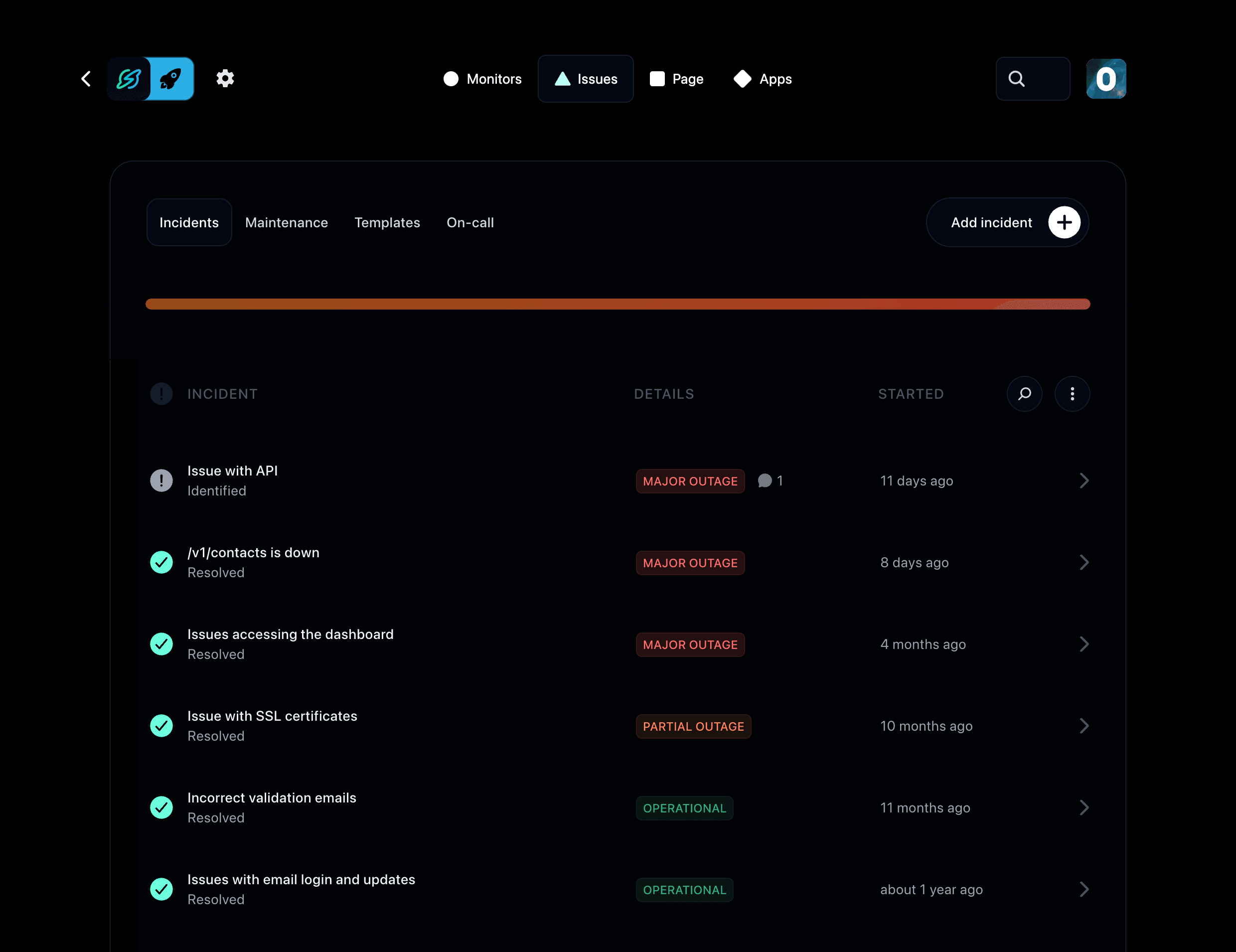
How do I add an incident?
Log in at instatus.com/login, choose your project, go to Incidents and click Add incident. Then set the status, title, description and affected components, and choose whether to publish it to your status page.
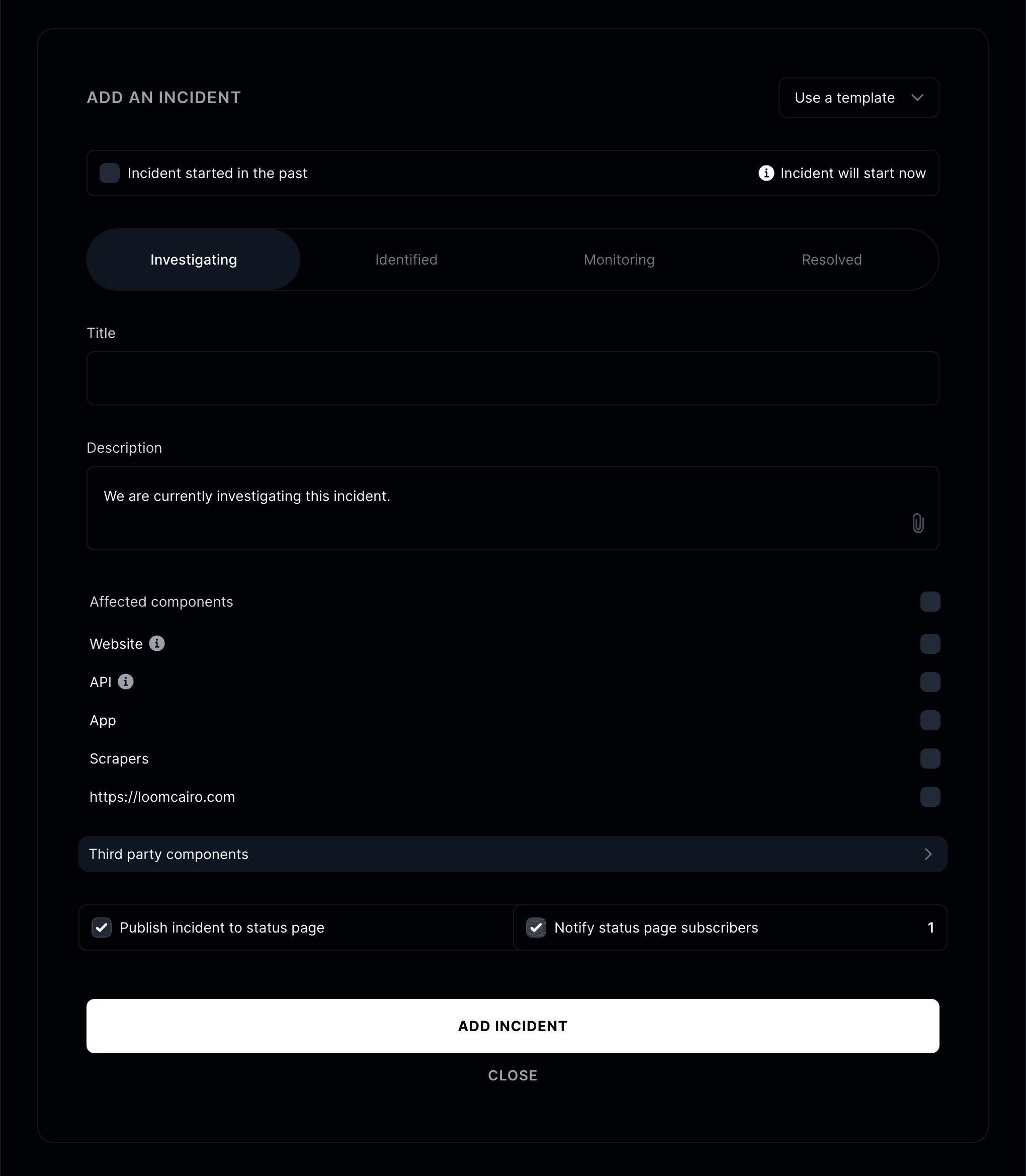
- Checkmark to select if the incident started in the past.
- Status: Could be
Investigating,Identified,MonitoringorResolved. - The title of the incident.
- A detailed description of the incident.
- Components that are affected by the incident.
- Checkmark to publish the incident to your status page.
Click Add incident, and your incident will be created.
How do I add an incident update?
Open the incident and click Add an update to change its status, description, affected components or date, and optionally notify subscribers.
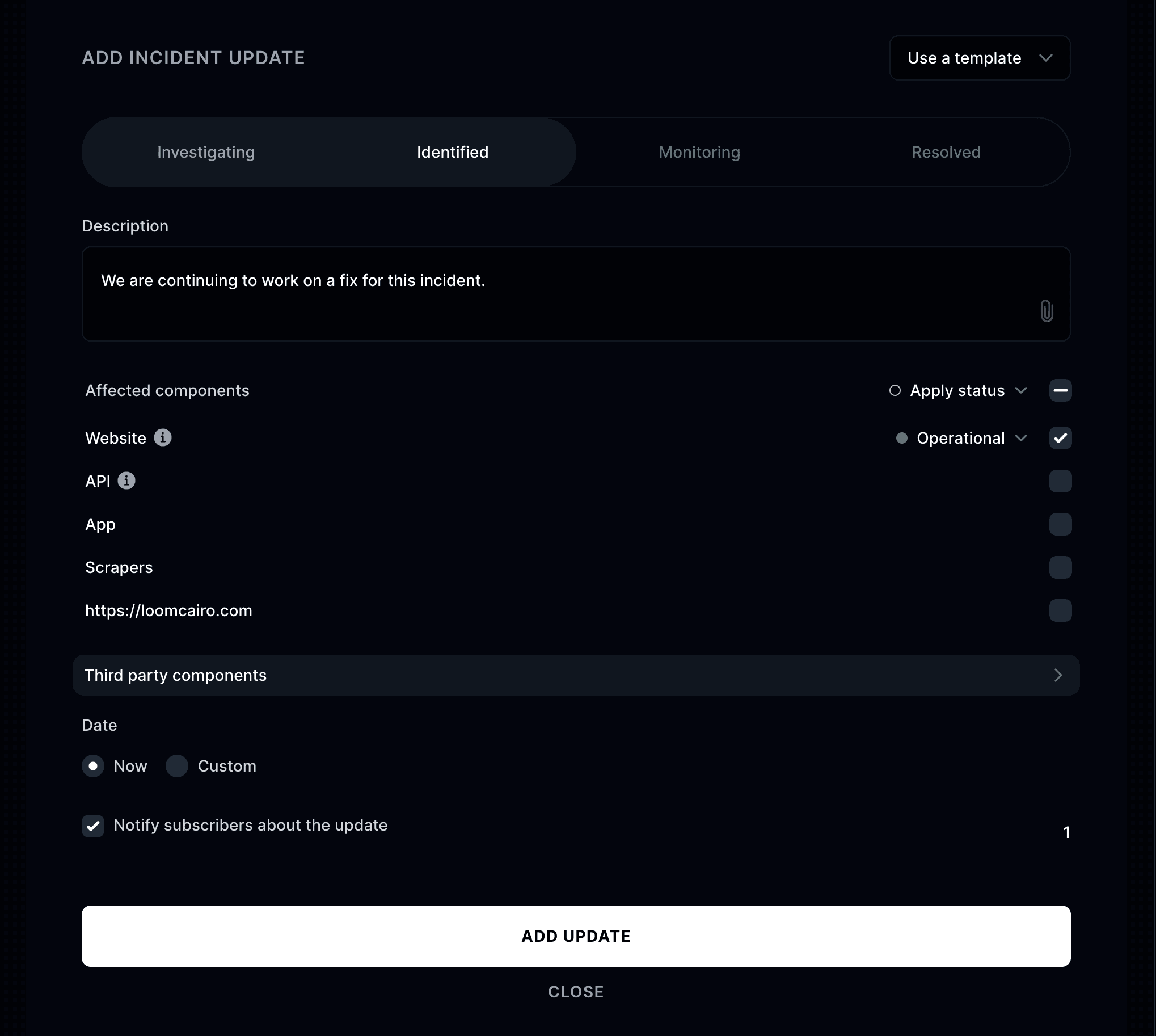
Finally, click Add update to publish it.
How do I add a postmortem?
Open a resolved incident and click Add postmortem, then write it in Markdown and pick a date after the incident's last update. A postmortem is a final review that documents lessons learned, root causes and long-term fixes.
When you add one:
- Write your postmortem in markdown. Code blocks are supported, so you can include logs or configuration snippets.
- Pick a date for the postmortem. It must be after the incident's last update.
- Choose whether to notify subscribers about the postmortem. You can also fine-tune exactly who gets notified.
The postmortem appears on your status page as the final entry in the incident's timeline.
If you use Instatus for Slack, you can also add a postmortem by running /incident postmortem in the incident channel.