

We Made a List of the Best IT Incident Management Software [2026]

Quick Summary
Finding the right IT incident management software can be the difference between a five-minute fix and a five-hour outage. In this article, we review 12 of the best tools available in 2026, from enterprise platforms to developer-friendly alternatives, comparing their features, pricing, and ideal use cases so you can make a faster, more confident decision when it matters most.
Looking for the Best IT Incident Management Software?
You're deep into deploying a new feature for your SaaS platform when, without warning, a critical service dependency goes down. As the clock ticks, customer complaints pile up, and the pressure mounts. If you work in SaaS, DevOps, or development, you know that every second of downtime is critical.
Instatus specializes in equipping teams like yours with the tools to manage and communicate during these high-stress situations. With a platform designed to alleviate the chaos of IT incidents, Instatus can bring clarity and control to what can otherwise be a company's most trying moments.
This guide compares 12 incident management tools, covering features, pricing, and ideal use cases, to help you choose the right option quickly and confidently.
Why Listen To Us?
With great user feedback, we've helped companies like Deno, Podium, Wistia, and Restream use status pages and incident management tools to improve monitoring, response times, and communication during outages.
What is IT Incident Management?
IT incident management is how IT teams respond when unexpected issues disrupt your services, from minor bugs to major outages. Using incident management tools, teams restore normal operations quickly while minimizing impact on customers and business continuity. In short, it's about keeping your services reliable, reducing downtime, and handling tech issues efficiently.
Why Do You Need IT Incident Management Software?
- Minimize Downtime: Every minute offline costs money and trust. Incident management tools help teams resolve issues fast, address root causes, and get systems back online efficiently.
- Maintain Transparency: Tools like Instatus let you communicate status updates clearly to customers and stakeholders, building trust even during disruptions.
- Improve Response and Resolution: Structured processes and tools guide teams through incidents, helping them act quickly, resolve problems, and prevent future issues.
- Enhance Post-Incident Learning: Post-incident reviews and reports provide insights to prevent recurrence, improve workflows, and strengthen overall service reliability.
12 Best IT Incident Management Software [2026]
| Tool | Best For | Starting Price | Free Tier | Setup Time |
| Instatus | Status pages + monitoring | $20/mo (flat) | Yes (15 monitors) | Under a minute |
| PagerDuty | Large enterprises | $21/user/mo | Yes (5 users) | 1-2 days |
| ServiceNow | Enterprise IT | Custom | No | Varies |
| Incident.io | Slack-native teams | $15/user/mo | Yes (Basic plan) | 1 day |
| Better Stack | Developer teams | $29/mo | Yes (10 monitors) | 2 hours |
| Squadcast | SLO-Driven Teams | $12/user/mo | Yes (5 users) | 1 day |
| Splunk On-Call | Splunk users | Custom | Trial only | 1-2 days |
| FireHydrant | SRE teams | $20/user/mo | Trial only | 1 day |
| Rootly | Automation-focused | $20/user/mo | No | 1 day |
| Spike.sh | SMB Teams | $7/agent/mo | No | 2 hours |
| OnPage | Healthcare/regulated | $13.99/user/mo | No | 1 week |
| Grafana OnCall | Grafana users | $19/mo (Base) | Yes | 1 day |
1. Instatus
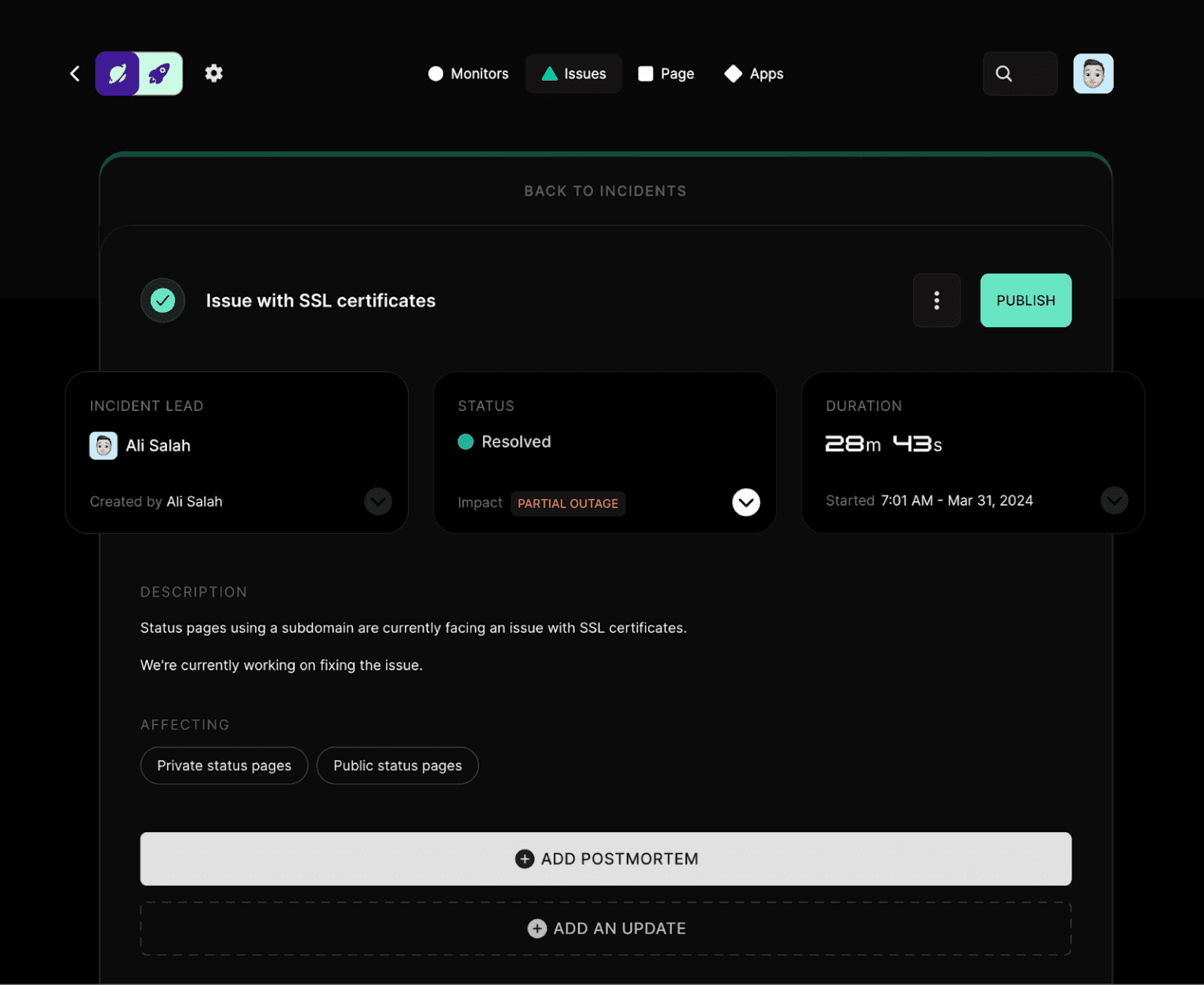
Instatus is a user-friendly IT Incident Management and Monitoring software offering intuitive, customizable status pages and integrated monitoring capabilities. Our platform supports on-call scheduling, notifications via multiple channels, and multi-language support, making it ideal for businesses seeking efficient incident communication and monitoring. Plus, our affordable pricing plans and fast page loads stand out as significant pros you wouldn't want to overlook.
Key Features
- Intuitive Status Pages: Allows for the creation of beautiful, responsive status pages that are on-brand and can be made public or private to keep your users and customers informed about any downtimes and maintenance.
- Integrated Monitoring: Offers monitoring for websites, APIs, keywords, SSL, TCP, ping, and DNS to alert when issues occur. Plus, get real-time updates every 30 seconds from multiple locations.
- On-call Scheduling & Routing: Enables the setup of on-call schedules and routing rules to ensure that the right people are notified whenever an issue occurs.
- Alerts & Notifications: Receive instant alerts and notifications via email, SMS, phone calls, Slack, or Teams when an incident occurs.
- Escalation Rules: Automatically escalate incidents according to predefined criteria to prevent any incidents from slipping through the cracks.
- Multi-language Support: Supports 40 languages for status pages so your users can understand crucial updates in their native language.
- Customization & Branding: Provides options to customize themes, colors, wording, and CSS to match your brand and preferences.
- Widgets: Allows users to embed widgets like a floating widget, footer badge, or intercom app to your websites to highlight your status.
Pricing
In addition to our free forever Starter plan, we offer three pricing options to cater to different business sizes and needs:
- Starter priced at $0 (15 monitors, 5 team members, 2 on-call members)
- Pro priced at $20/month (50 monitors, 50 team members, 20 on-call members)
- Business priced at $300/month (1,000 monitors, Unlimited team members, 50 on-call members)
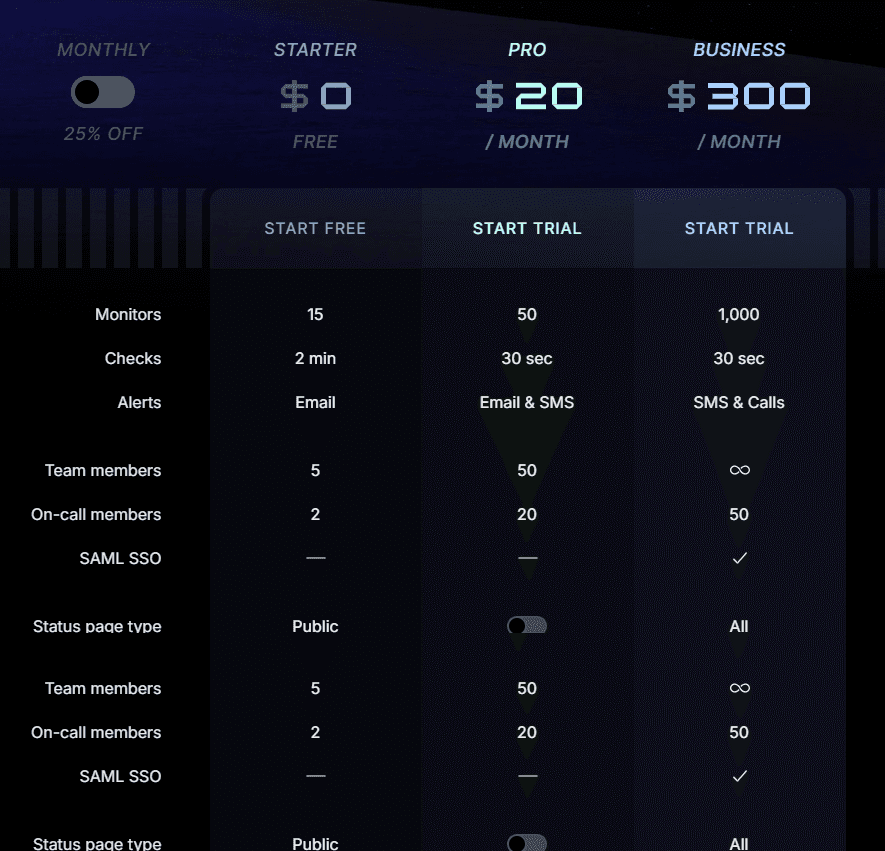
All of our pricing plans also include support a generous number of subscribers, on top of essential features such as custom domain, monitoring from multiple locations, and status pages.
2. PagerDuty
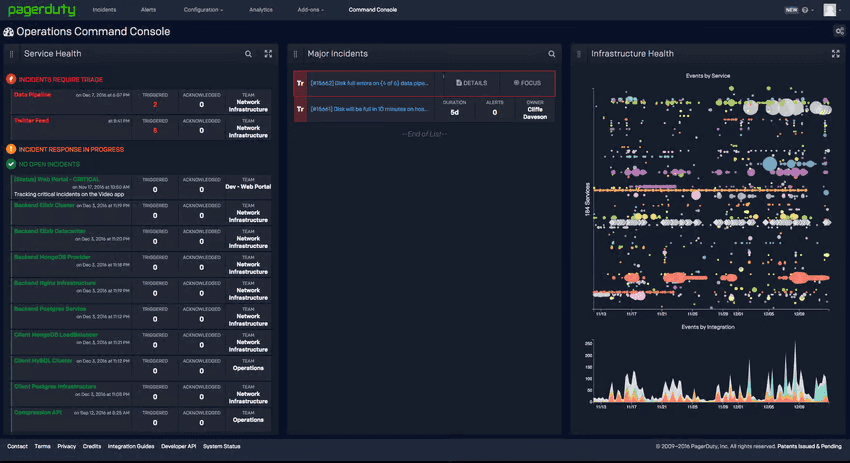
PagerDuty is a SaaS incident response platform that excels in automation and integration for IT departments, featuring response automation, stakeholder communication, and extensive ITSM integration. Its ability to provide operational insights and facilitate major incident learning, alongside a seamless mobile experience and runbook automation, makes it a powerful tool for businesses aiming to improve incident response.
Key Features
- Global Event Orchestration: Allows for the enrichment of events, controlling their routing based on a set of rules, and the initiation of automated self-healing actions.
- AIOps: Automates the identification and resolution of common operational issues, predicts potential problems, and facilitates continuous learning from past incidents to improve future responses.
- Status Update Notification Templates: Standardizes communication during incidents through pre-set notification templates, ensuring that stakeholders receive timely and consistent updates.
Pricing
PagerDuty provides a free plan suitable for small teams, as well as more advanced Professional and Business plans designed for growing teams and enterprises.
- Professional plan is priced at $21 per user/month
- Business plan is $41 per user/month.
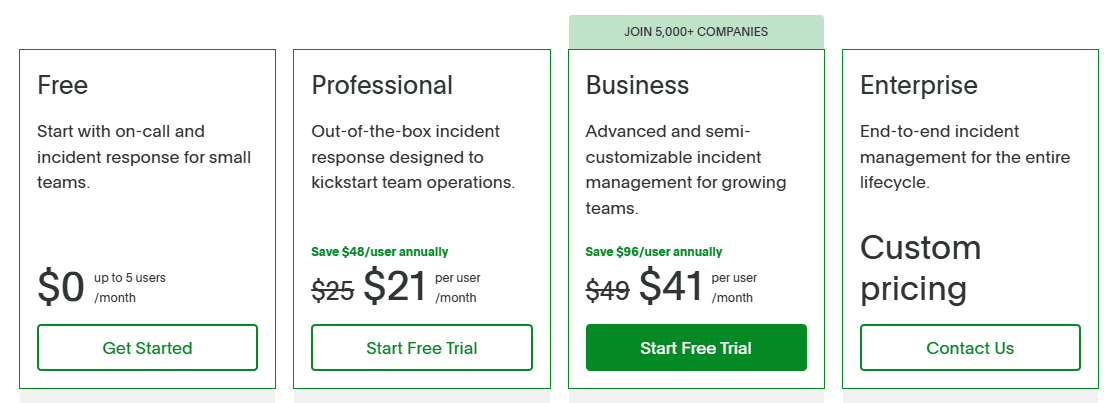
You can also customize your plan by adding features like AIOps, automation actions, stakeholder licenses, and status pages.
3. ServiceNow
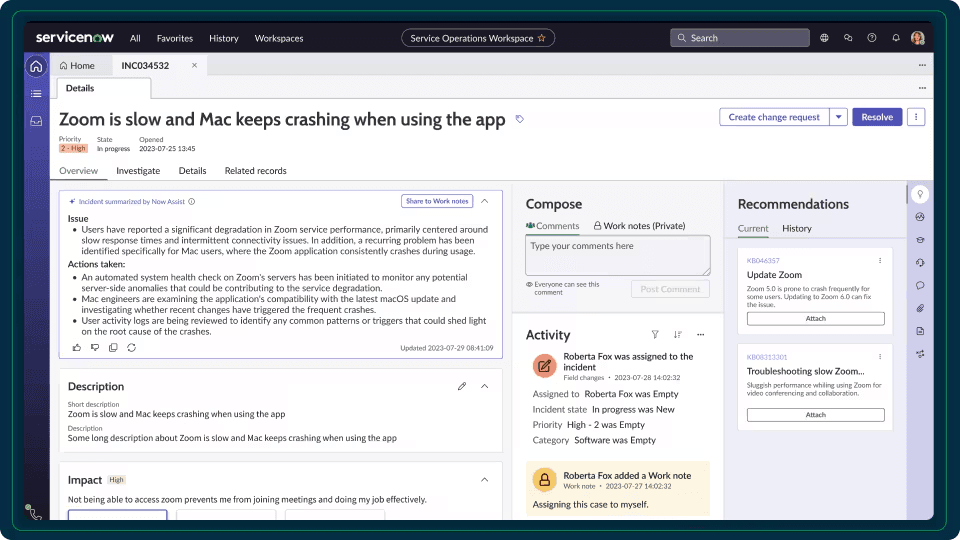
ServiceNow offers a comprehensive IT Incident Management solution within its ITSM platform, focusing on reducing IT service interruptions and managing incident lifecycles. Features like major incident management, AI-powered insights, a single-pane agent view, and a native mobile app help streamline the incident resolution process.
Key Features
- Major Incident Management: Built-in workflows to identify, communicate, and resolve high-impact outages effectively.
- Native Mobile App: Triage, update, and resolve incidents from anywhere.
- Now Assist AI (Premium): Predictive intelligence and ML-based incident categorization. Requires ITSM Professional tier or higher.
- Field Service Management (Add-on): Separate module for dispatching technicians, managing parts, and tracking on-site repairs tasks.
Pricing
Contact ServiceNow to request a custom quote, which includes scalable packages tailored to your needs.
4. Incident.io
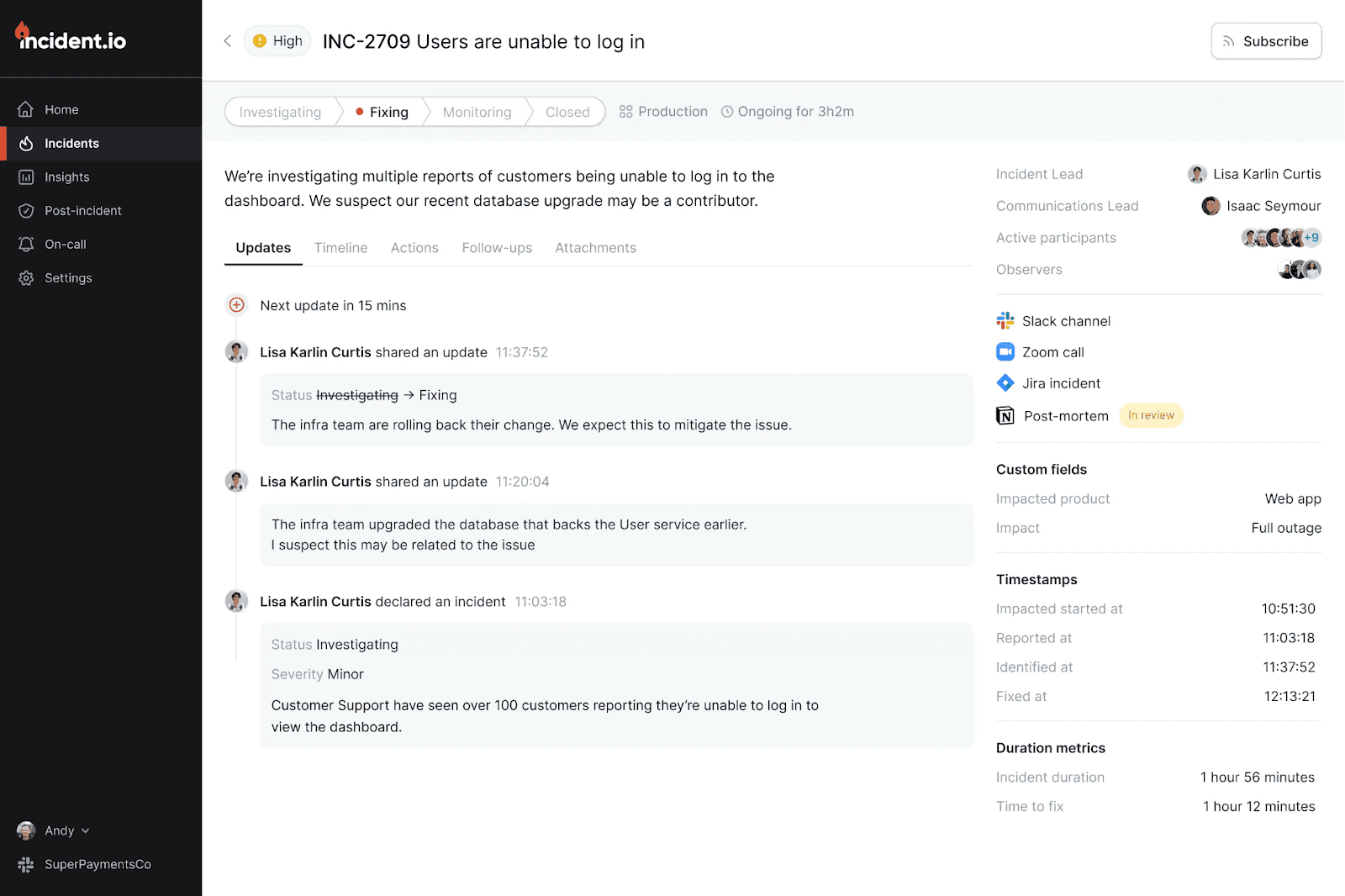
Incident.io is a Slack-powered incident management platform designed to streamline the entire incident management process from detection to resolution and post-incident analysis. It integrates on-call, incident response, and status pages into one cohesive system, making it effective for high-growth companies looking for a solution that simplifies communication and collaboration during incidents.
Key Features
- Catalog-Driven On-Call: Connects alert sources to your service catalog and automatically notifies the team responsible for the failing service.
- AI SRE: Summarizes incident Slack threads, extracts action items, and analyzes historical data to prevent repeat outages.
- Integrated Status Pages: Public, private, or internal status pages that update automatically from your incident workflow.
- Workflow Automation: Trigger-based engine that auto-creates Jira tickets, Zoom rooms, and Slack channels the moment an incident is declared.
Pricing
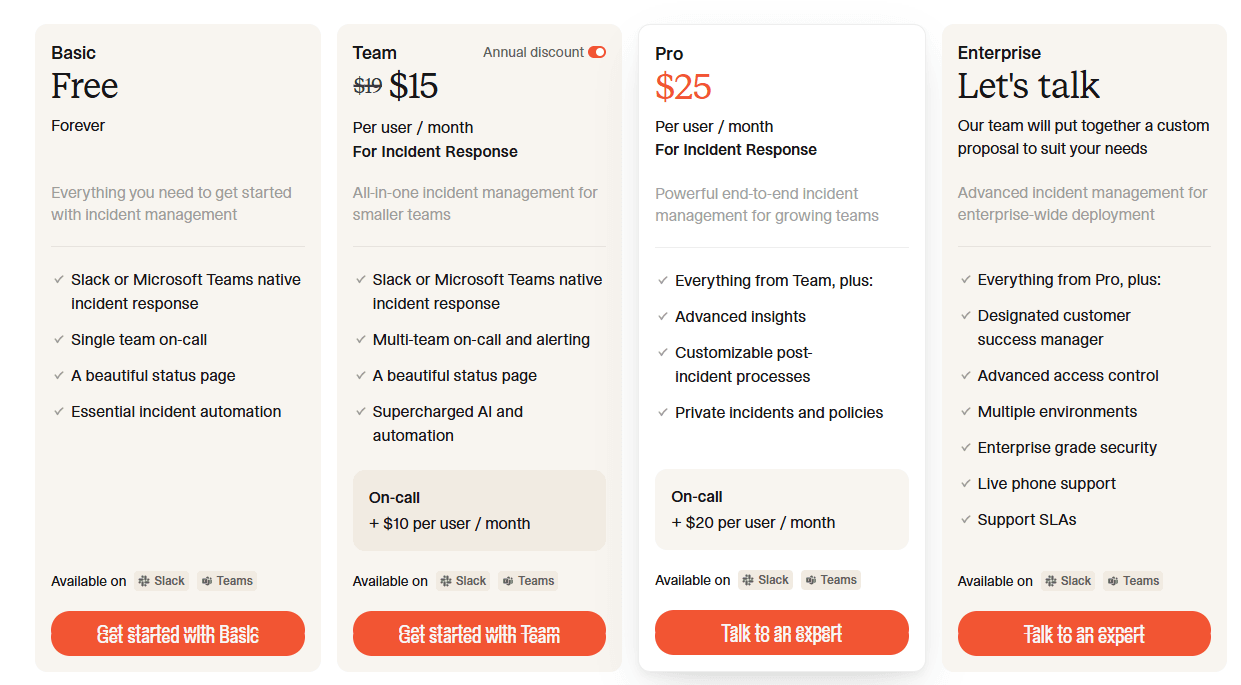
Incident.io offers three pricing plans:
- Starter Plan ($15/user/month)
- Pro Plan ($25/user/month)
- Enterprise Plan (custom)
5. Better Stack
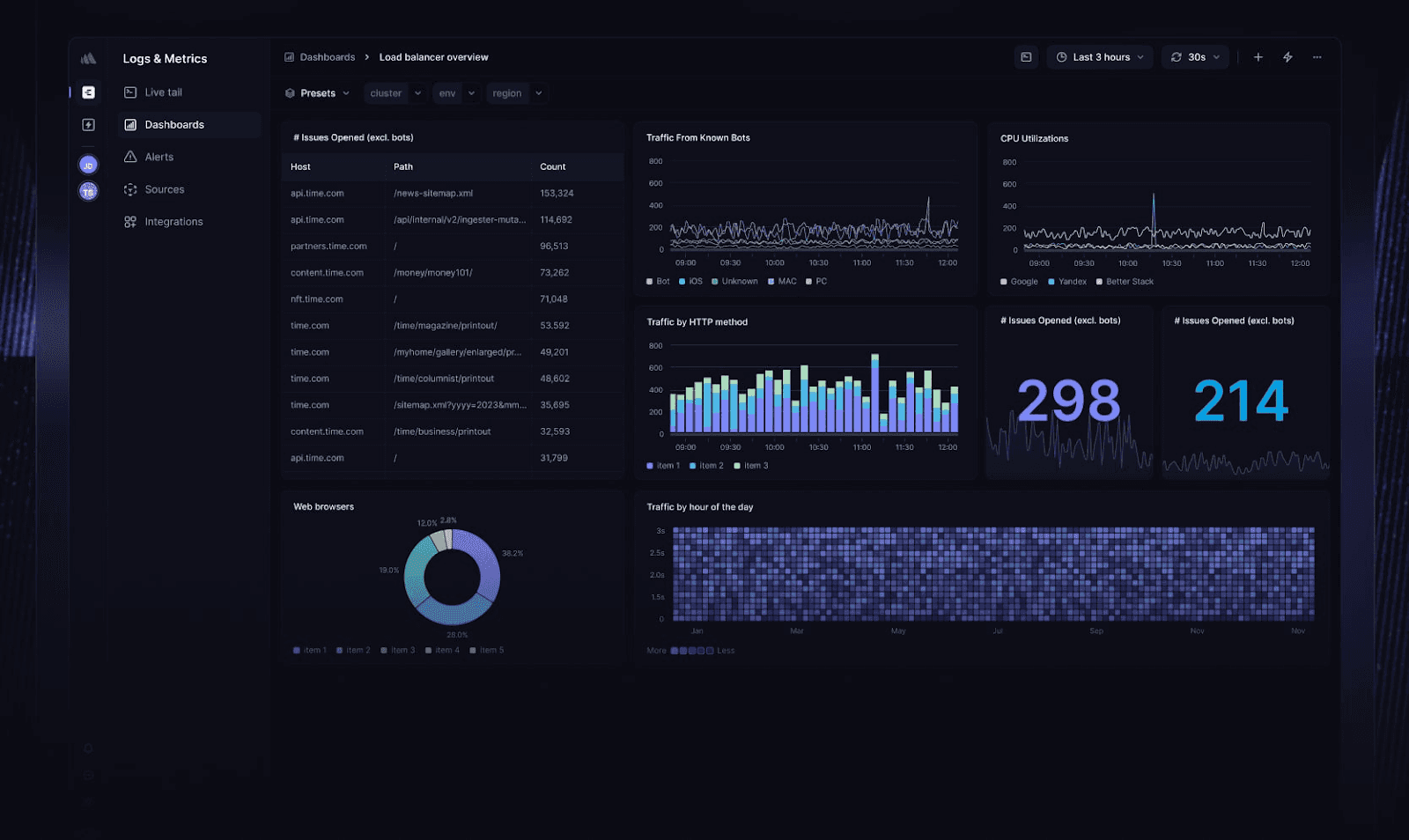
Better Stack (formerly known as Better Uptime) is an integrated platform offering a suite of tools for IT Incident Management, including website monitoring, incident management with on-call alerting, and status pages.
Its comprehensive monitoring capabilities ensure everything from websites to servers can be checked for uptime, SSL, ports, DNS, and more, with actionable alerts provided via a variety of communication channels.
Key Features
- Website Monitoring: Allows monitoring of any web service or user flow to ensure optimal performance and quick identification of issues.
- Uptime Monitoring: Offers fast, 30-second checks across multiple locations to verify incidents, reducing false positives and ensuring real issues are promptly addressed.
- Screenshots and Error Logs: Provides visual evidence and detailed logs of errors, enabling quicker diagnosis and resolution of incidents.
Pricing
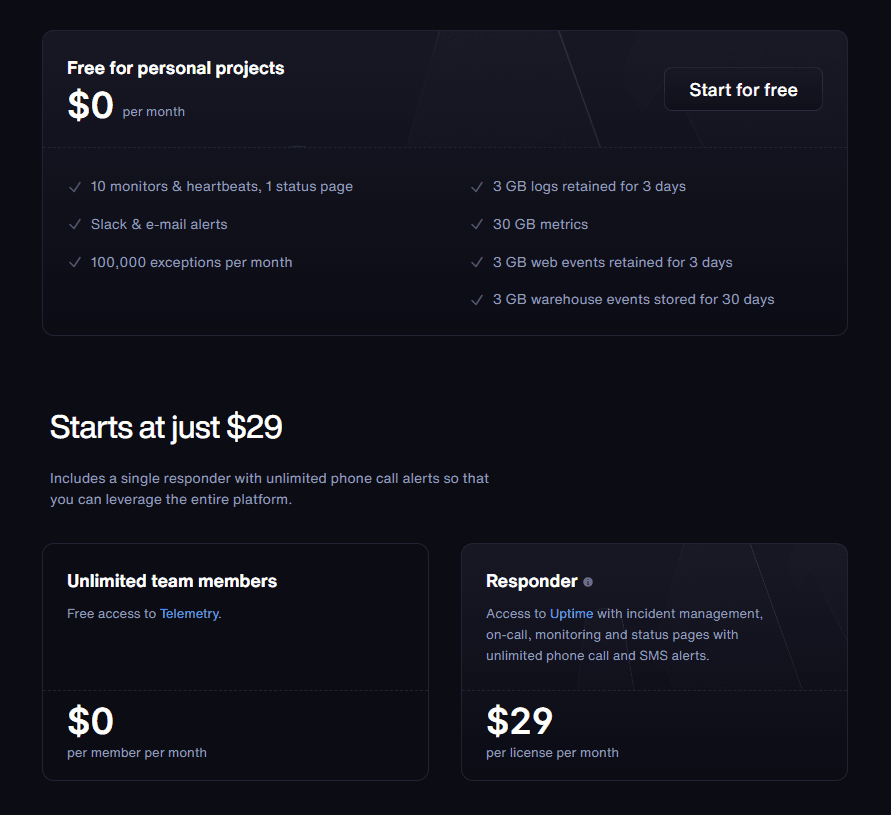
BetterStack offers four pricing tiers:
- Free plan includes basic monitoring, 10 monitors, and email and Slack alerts.
- Per-Responder plan is $29/user/month and includes unlimited phone and SMS alerts, on-call scheduling, and 30-second checks.
- Add-on Packs are $25/month per batch of 50 monitors or additional status pages.
- Enterprise plan is custom-priced for large-scale infrastructure and advanced security requirements.
Each paid plan includes essential features like unlimited phone and SMS alerts for responders, and the ability to scale capacity for monitors and status pages via modular add-ons.
6. Squadcast
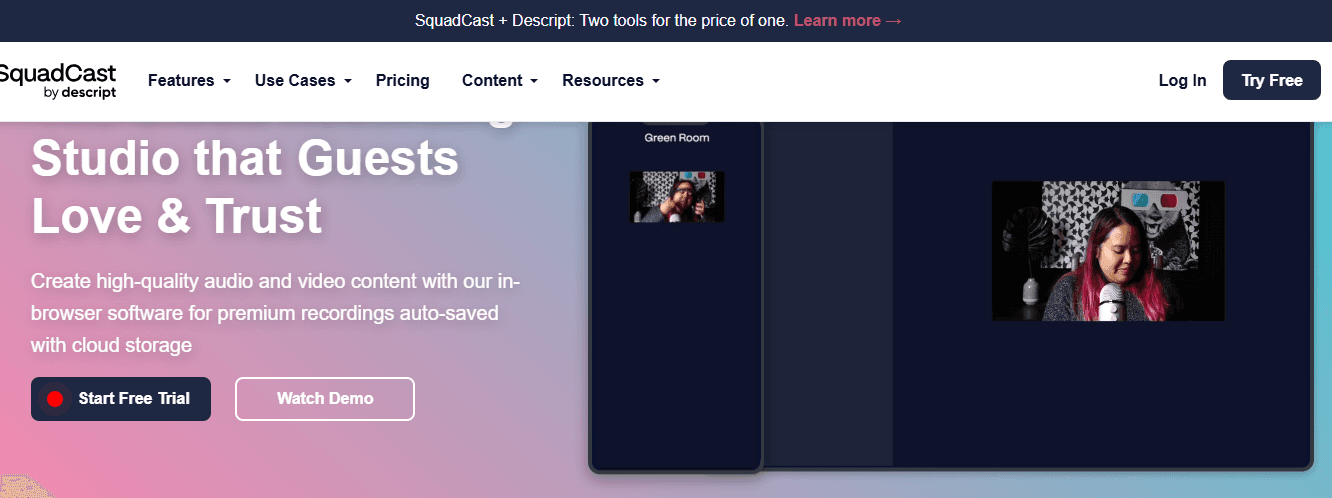
Squadcast is an all-in-one incident management platform built around SRE-led incident response. It reduces alert fatigue through machine learning-based alert grouping and a unified SLO tracking dashboard.
Key Features
- SLO-Based Alerting: Prioritize incidents that directly impact reliability targets
- Intelligent Noise Reduction: ML deduplication groups related alerts into single incidents
- Automated Workflows: Trigger status page updates, Jira tickets, or Zoom bridges based on incident type
- Native Status Pages: Manage public and private pages directly within the platform
Pricing
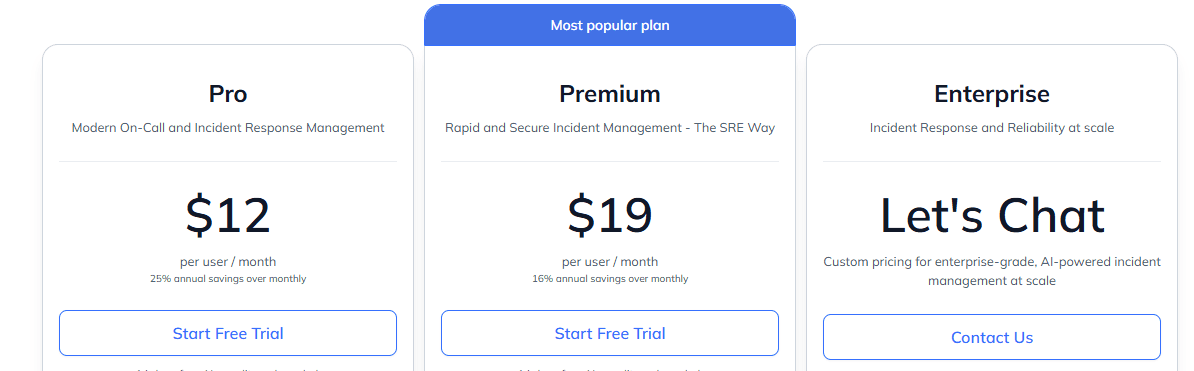
- Free plan with up to 5 users, basic on-call, 175+ integrations
- Pro priced at $12/user/month
- Premium priced at $19/user/month (adds SLO tracking, advanced workflows, status pages)
- Enterprise priced at $26/user/month (custom roles, full security suite, dedicated support)
7. Splunk On-Call
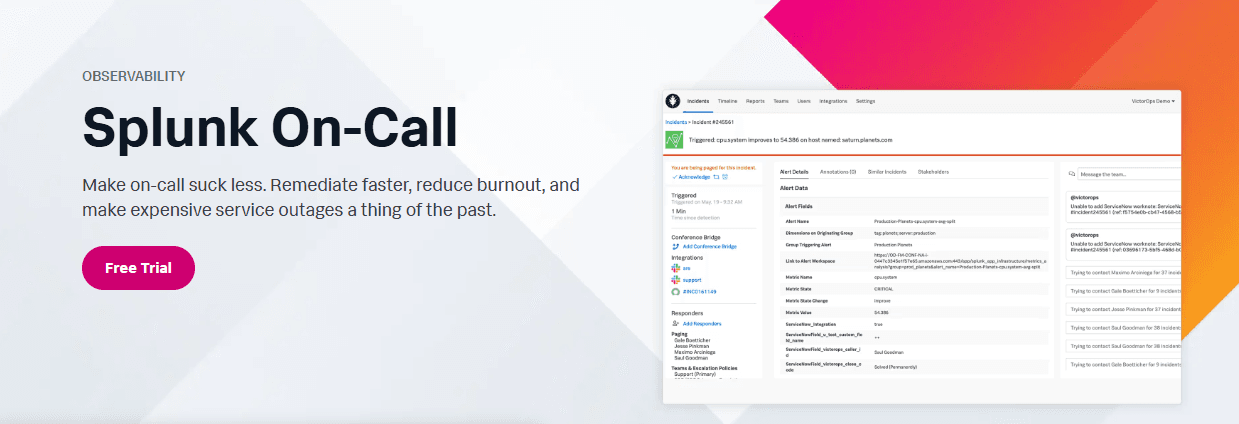
Splunk On-Call (formerly VictorOps) integrates deeply with the Splunk observability ecosystem. It offers collaborative incident management with visual timelines, making it ideal for teams already using Splunk for monitoring. Note that Splunk was acquired by Cisco in 2024, so verify current product branding and availability directly with the vendor.
Key Features
- Collaborative Timelines: Visual incident history showing who did what and when
- Mobile Apps: Full-featured iOS and Android apps for on-the-go incident management
- Custom Alert Routing: Rules-based routing by content, time, and source
- Splunk Integration: Native connection to Splunk observability products
Pricing
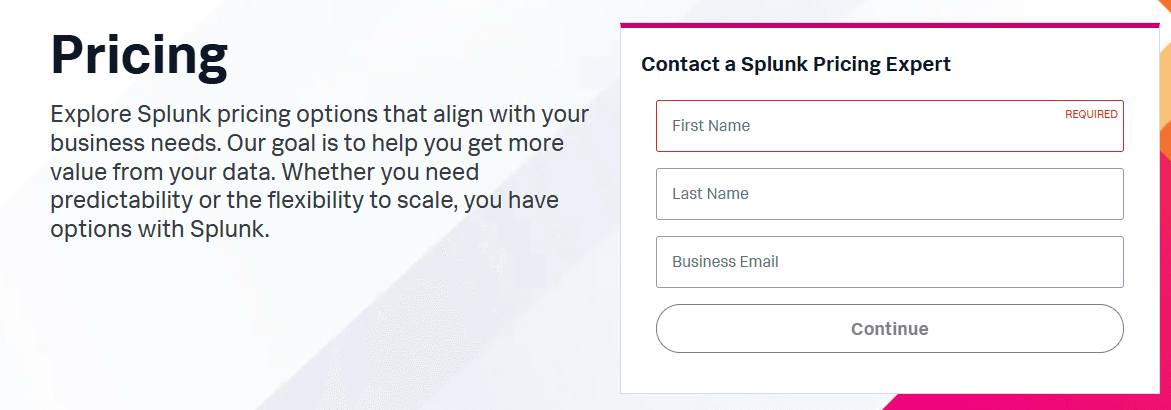
Pricing is estimated at $5/user/month (billed annually). Contact the vendor directly to confirm current pricing following the Cisco acquisition.
8. FireHydrant
FireHydrant connects incident response to reliability practices like service catalogs and SLOs. Built for engineering teams that want to mature their incident response process beyond basic alerting.
Key Features
- Service Catalog Integration: Connect incidents to specific services
- Automated Runbooks: Execute predefined response procedures automatically
- Retrospective Automation: Auto-generate timelines and structured post-mortems
- SLO Tracking: Monitor how incidents affect service level objectives
Pricing
- Starter priced at $20/user/month
- Platform Pro priced at $9,600/year (flat fee covering up to 20 responders)
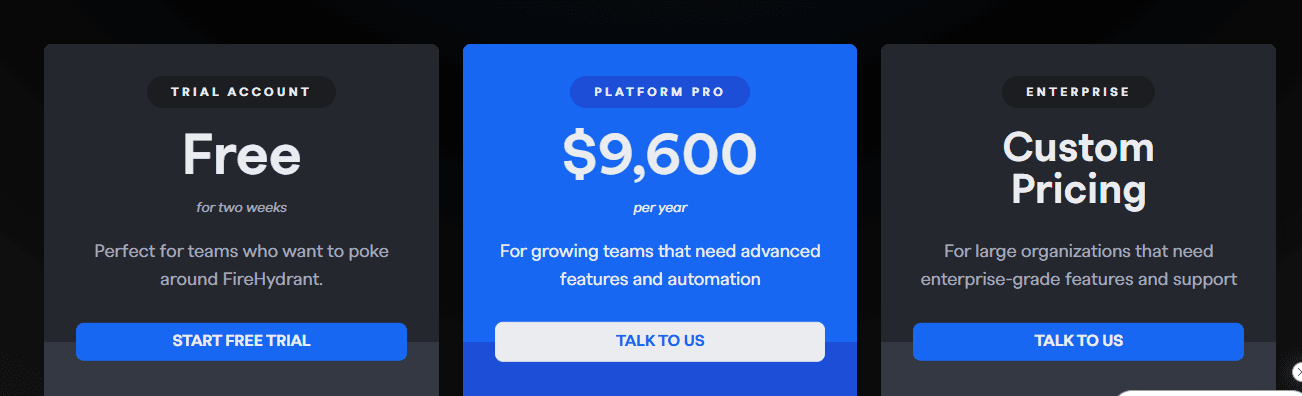
Confirm current tier availability on their pricing page before committing.
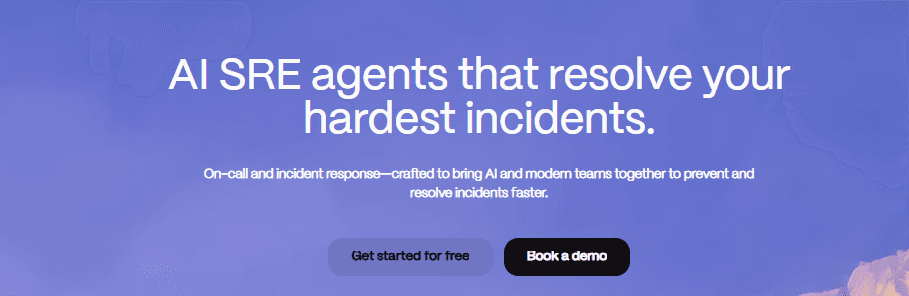
9. Rootly
Rootly focuses on automation and learning. It handles the operational side of incidents while capturing data for continuous improvement. Best for teams that want less manual work during incidents.
Key Features
- End-to-End Automation: Auto-create channels, page responders, assign roles, send updates
- Deep Slack/Teams Integration: Turn your chat tool into an incident command center
- Data-Driven Retrospectives: Automatically track MTTR, MTTD, and reliability metrics
- Action Item Tracking: Follow-up tasks tracked to completion
Pricing
- On-Call Standalone at $20/user/month (no seat minimum)
- Full Platform custom enterprise rates.
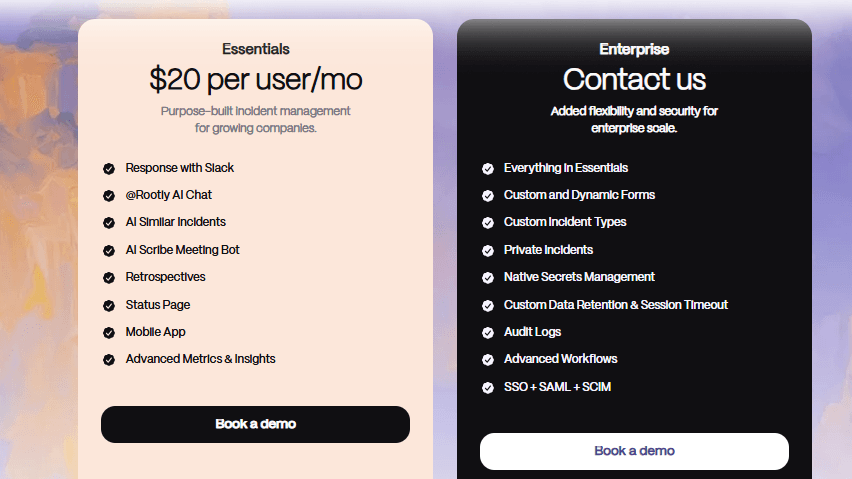
Contact Rootly directly for a quote.
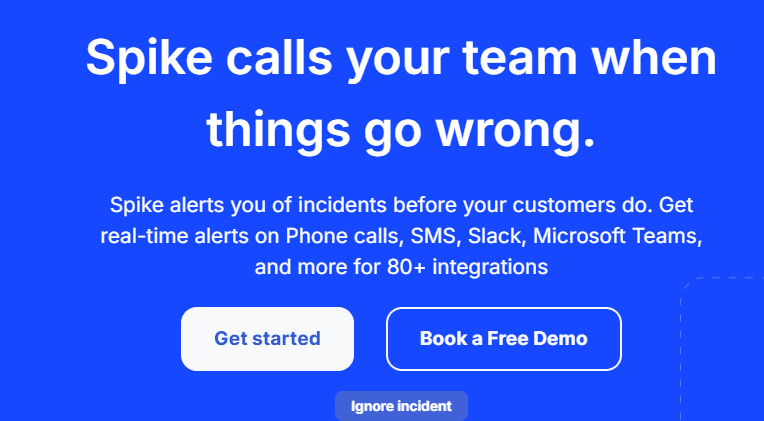
10. Spike.sh
Spike.sh is straightforward incident management for small to mid-sized teams. It focuses on fast setup with transparent pricing and includes status pages at no extra cost.
Key Features
- Unlimited Alerts: No per-alert pricing across all channels
- Built-in Status Pages: Included in every plan at no extra cost
- ChatOps Integration: Native Slack and Microsoft Teams support
- Fast Migration: Most teams migrate in under 2 hours
Pricing
- Starter at $7/agent/month (100 phone/SMS alerts, unlimited WhatsApp/Telegram)
- Business at $14/agent/month (unlimited phone/SMS, multiple teams)
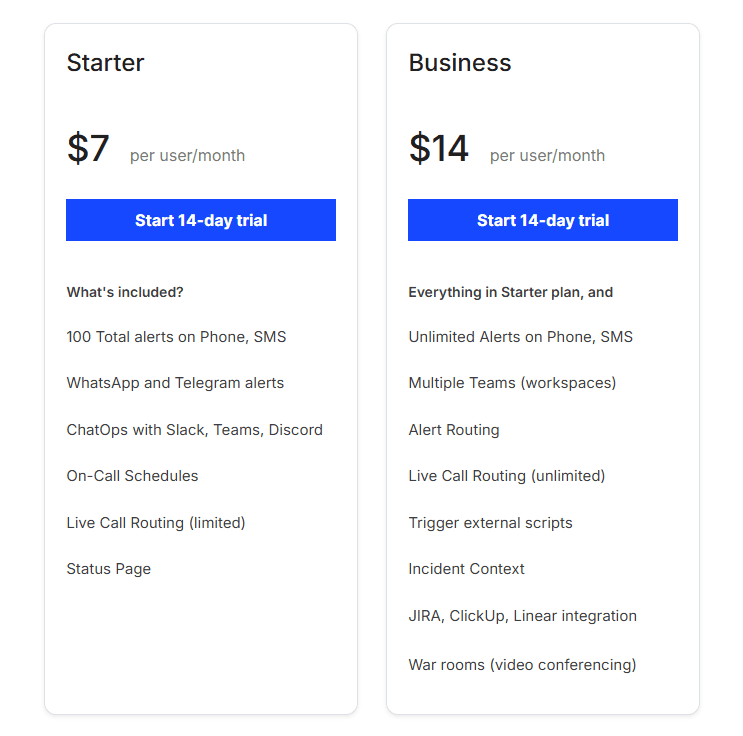
Spike.sh has offered migration discounts for teams switching from other platforms, including Opsgenie. Check their website for current promotional pricing before committing.
11. OnPage
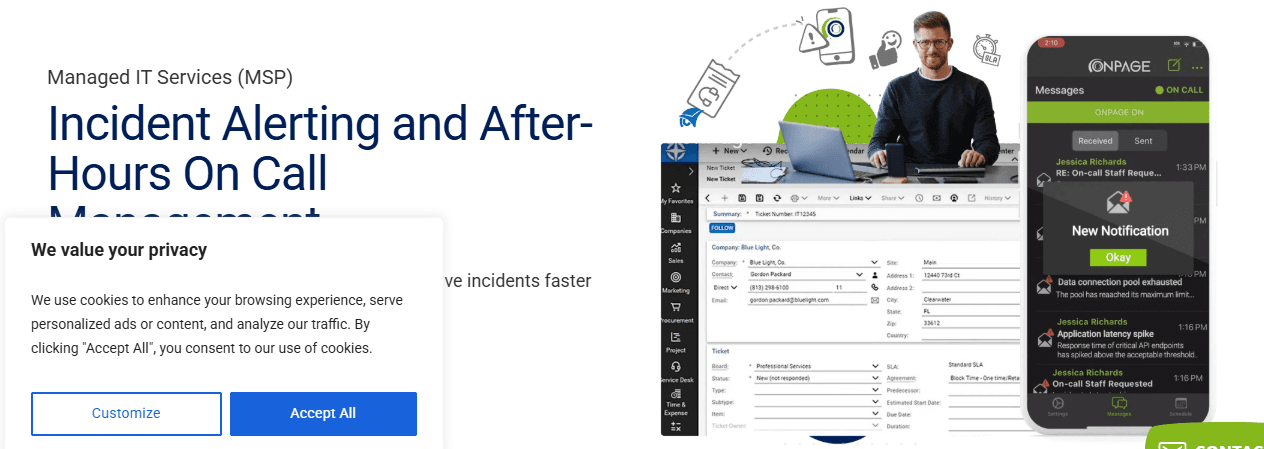
OnPage specializes in HIPAA-compliant alerting for healthcare and regulated industries. Priority notifications override silent mode to ensure critical alerts get through.
Key Features
- Priority Messaging: Alerts override silent mode and do-not-disturb settings
- HIPAA Compliance: Secure messaging for healthcare regulations
- Redundant Delivery: Multiple delivery methods ensure alerts never get missed
- Audit Trails: Complete logging for compliance and incident review
Pricing
- Mobile priced at $13.99/user/month (HIPAA compliant, alert-until-read notifications)
- Enterprise Silver priced at $22.99/user/month (audit trails, remote data wipe, web console)
- Enterprise Gold priced at $28.99/user/month (on-call scheduling, full incident management)

12. Grafana OnCall
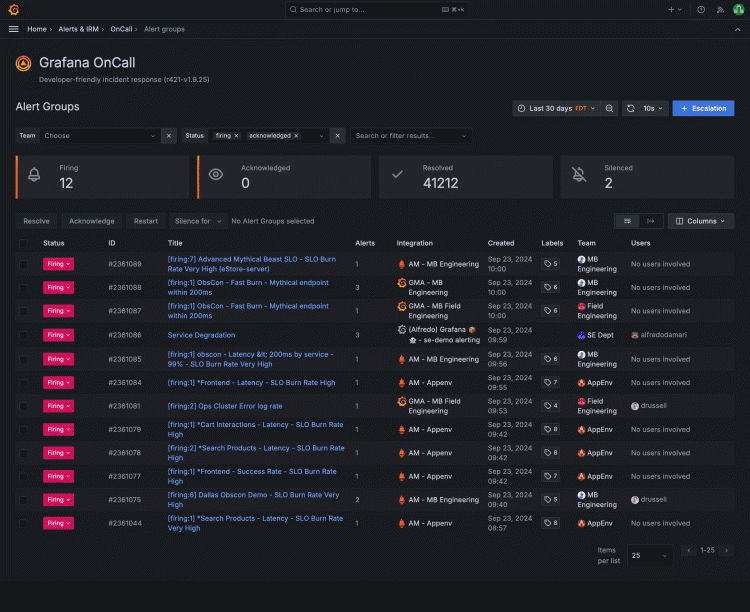
Grafana OnCall is open-source on-call management that integrates with the Grafana observability stack. Perfect if you already use Grafana, Prometheus, and Loki. Note: As of early 2026, the OSS version is Community Maintained and being archived, with official security patches prioritized for Cloud users. Enterprise teams should use the managed Cloud version.
Key Features
- Native Grafana Integration: Connects with existing Grafana dashboards and alerting
- Open Source: Self-host or use managed Cloud version
- Flexible Escalation: Complex routing and escalation policies
- Mobile Apps: Full-featured iOS and Android apps
Pricing
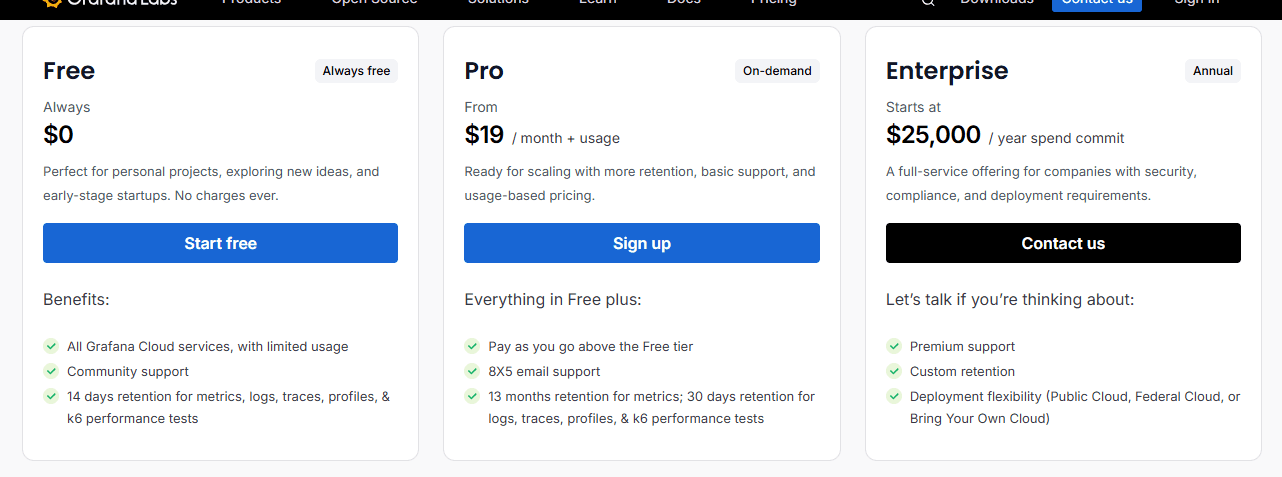
- Free plan includes up to 3 active IRM users per month.
- Pro plan carries a $19/month platform fee, includes 3 active IRM users, and bills additional users at $20 per active IRM user per month.
- Enterprise plan is custom priced with an annual commitment starting at $25,000 per year.
Criteria to Consider When Selecting the Right IT Incident Management Tool
When selecting an IT incident management tool that aligns with the needs of your SaaS company or DevOps team, it's essential to consider the following criteria:
Ease of Use
Time is of the essence during an IT incident, and the last thing you need is a tool that's complex and has a confusing interface. The ideal tool should have an intuitive interface that allows your team to navigate it easily and perform actions quickly. This ease of use ensures that all team members, regardless of their technical expertise, can contribute to resolving incidents as they arise.
Integration Capabilities
Your team likely uses a variety of tools for monitoring, communication, and project management. A good incident management tool should fit into your existing ecosystem without causing disruptions. Look for solutions that offer integrations with the services you already use, so you can automate workflows and streamline the incident resolution process.
Communication Features
During an incident, it's crucial to keep everyone informed, from the internal team to external stakeholders. The right tool should offer robust communication features that allow for real-time updates, notifications, and a way to centralize messages. This helps in managing the incident more effectively and ensures that everyone affected is kept in the loop.
Reporting and Analytics
After resolving an incident, you'll want to analyze what happened and why. A tool that provides detailed reporting and analytics can help you glean insights from incidents, leading to better preparedness and prevention strategies. Look for features that allow you to track incident patterns, response efficiency, and overall impact.
Streamline Your Incident Management Today
The tools and strategies in this guide empower your team to respond faster, reduce downtime, and maintain transparency when incidents occur. With 12 diverse options, from enterprise platforms like ServiceNow to developer-friendly tools like Spike.sh and flexible open-source solutions like Grafana OnCall, you can find a platform that fits your team's size, budget, and workflow.
The right incident management tool doesn't just fix problems, it transforms how your organization handles the unexpected, turning potential disruptions into manageable events.
Sign up and start building a more resilient IT operation with Instatus, reliable, user-approved, and designed to integrate seamlessly, keep stakeholders informed, and supercharge your incident response strategy.

Get ready for downtime
Monitor your services
Fix incidents with your team
Share your status with customers