

Status.io vs Instatus
Instatus is a more affordable alternative to Status.io with built-in uptime monitoring, incident response, and on-call — all in one platform.
Start for free
Hey! Trying to decide between Status.io and Instatus for your status page? Both are solid tools for keeping your users informed during downtime — but they take different approaches. Let's break it down honestly.
What's the overall summary?
| Status.io | Instatus | |
| Uptime monitoring | ||
| Incident response | ||
| Incident response on Slack | ||
| On-call | ||
| Pricing | From $79/mo | Free plan available |
| Multi-language status page | 19 languages | |
| Custom domains | ||
| Subscribers | 500 on Basic plan | More subscribers on every plan |
| Team members | 5 on Basic plan | More members on every plan. Reaches unlimited in Business plan |
| Status page speed | Server-rendered | Faster to load, CDN static pages |
| Private status pages | SSO & IP restrictions | |
| Location maps | Coming soon | |
| Status automation | Via external monitoring tools | Built-in monitoring or integrations |
So what does Instatus do better?
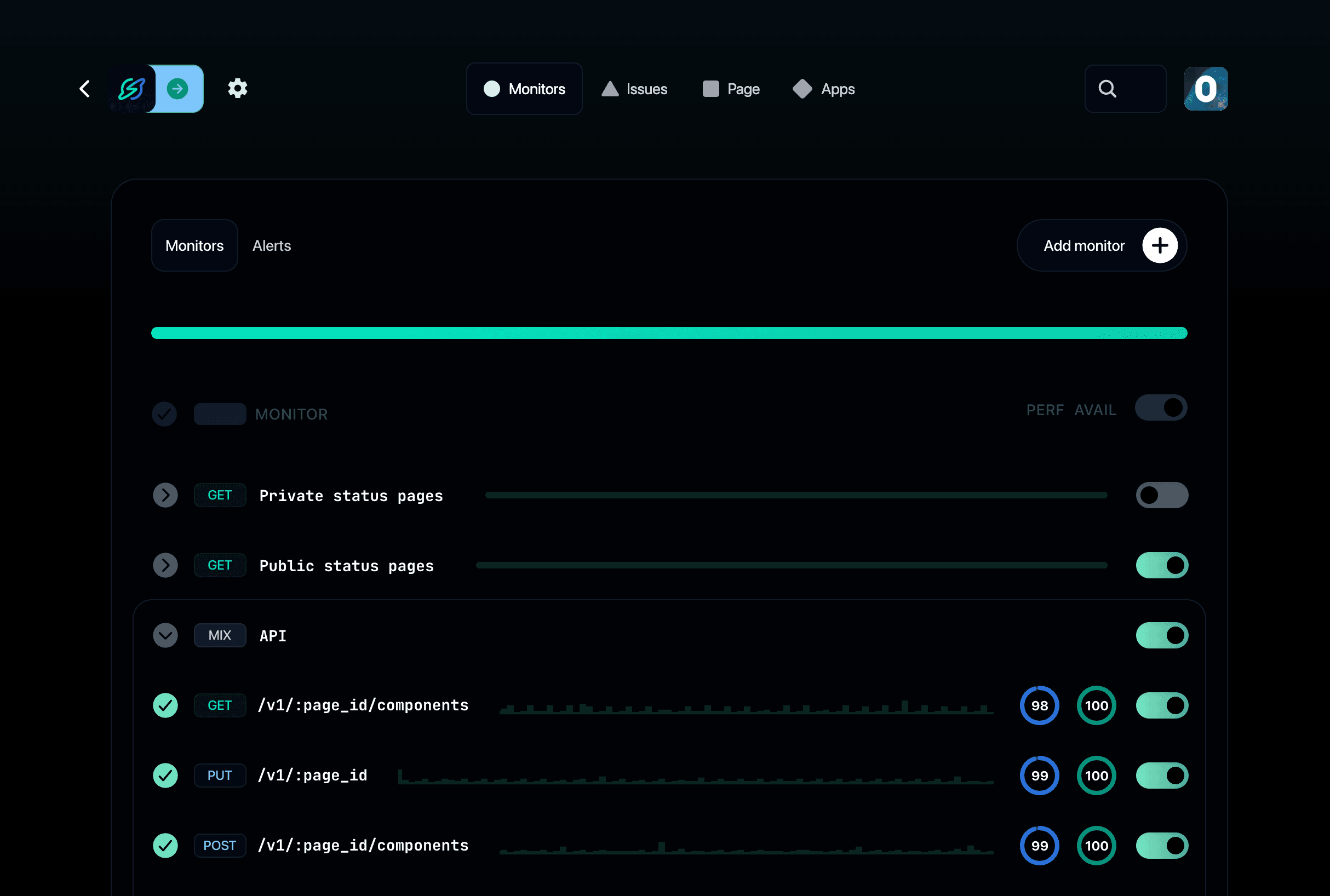
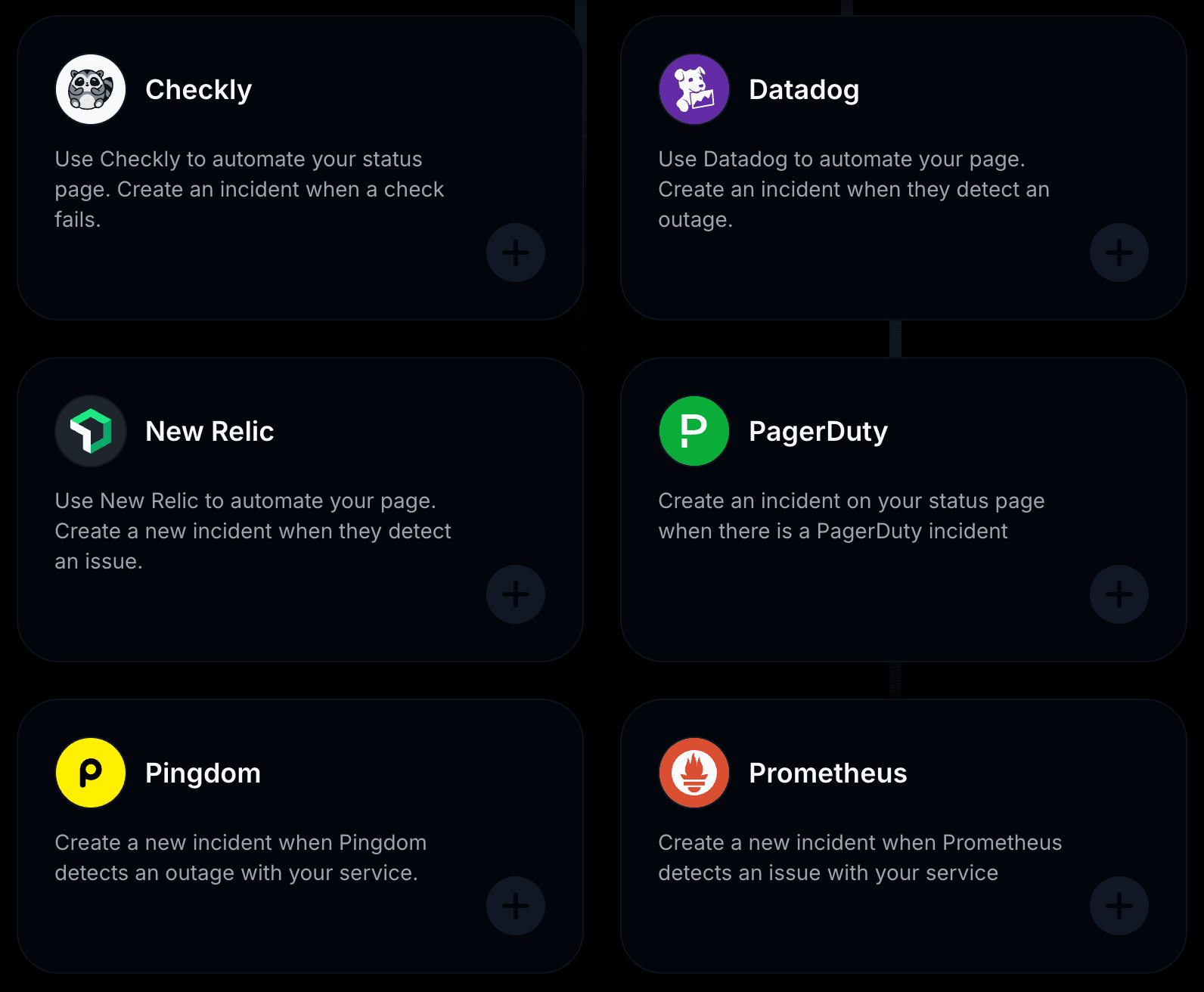
Status.io is a status page and incident communication tool — but it doesn't include built-in monitoring. You need to connect external tools like Pingdom or New Relic to automate status updates.
Instatus includes uptime monitoring, incident response, and on-call out of the box. You can handle every stage of an incident from a single platform.
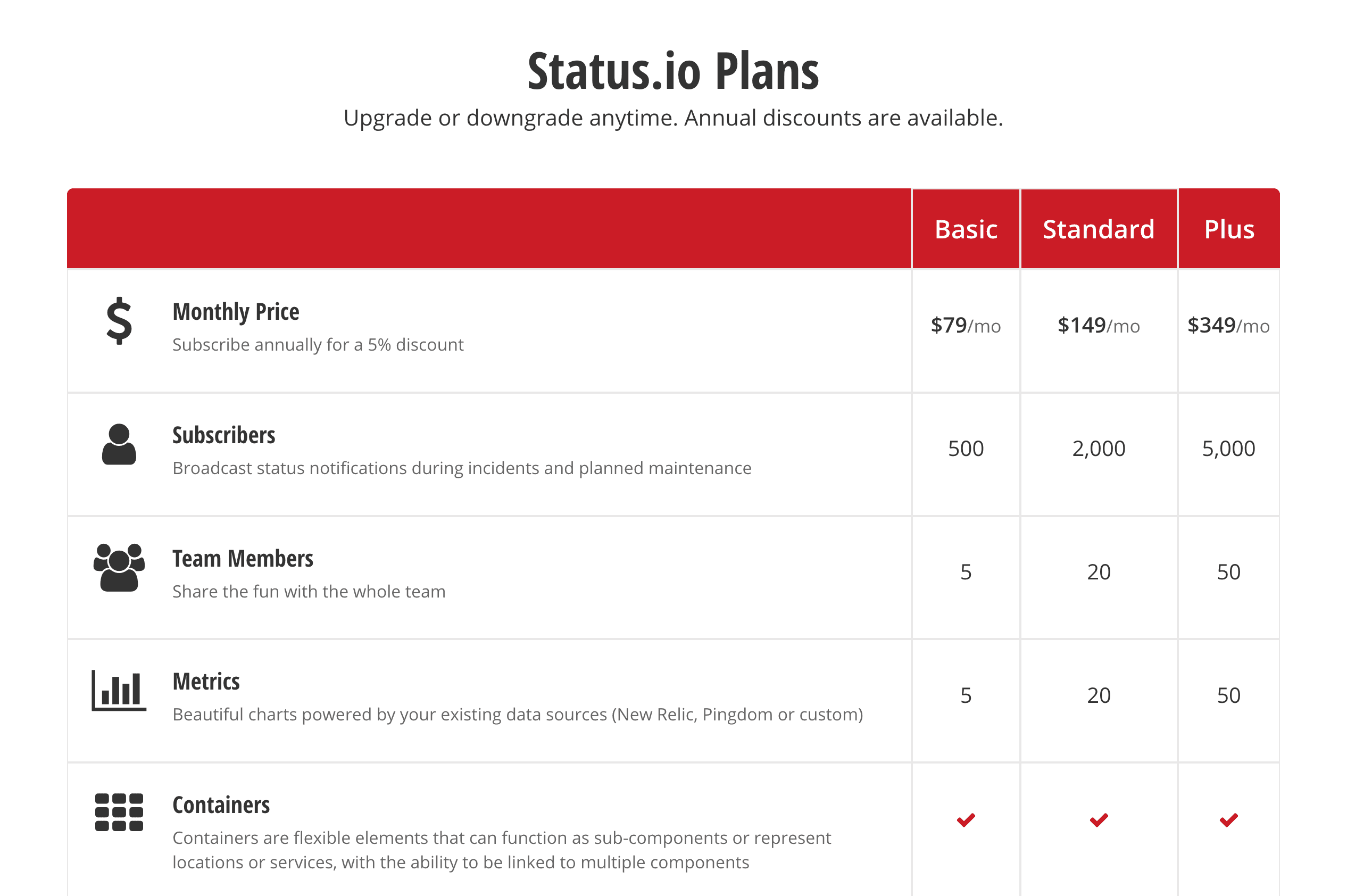
Status.io starts at $79/month for just 500 subscribers and 5 team members. There's no free plan.
Instatus has a free plan with unlimited teammates and subscribers, and paid plans start at $15/month with more features included at every tier.
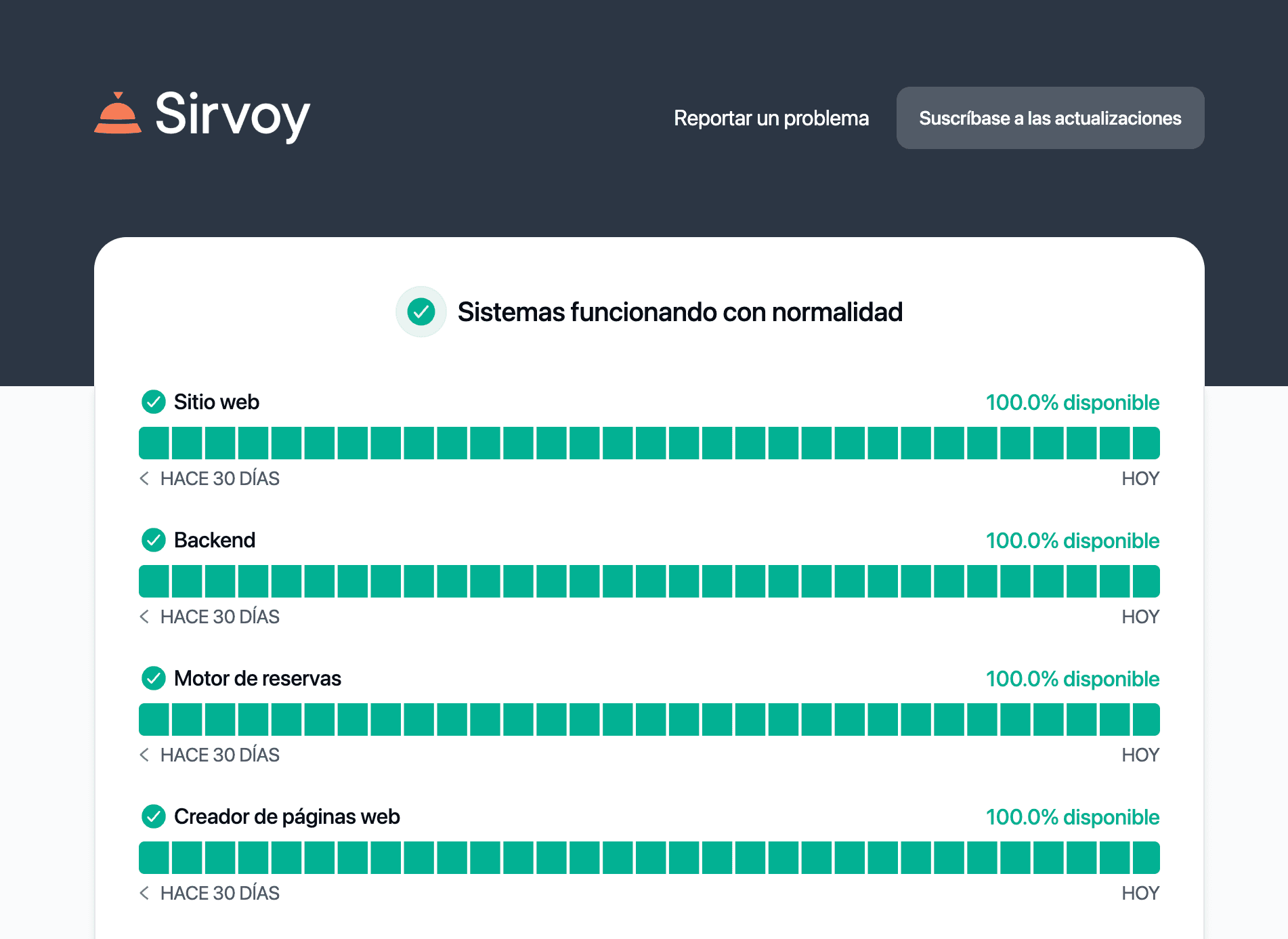
Instatus supports multi-language status pages out of the box with 19 languages, making it easy to keep your global users informed in their preferred language.
Status.io doesn't offer built-in multi-language support for status pages.
Instatus status pages are served as static pages via a global CDN, so they load fast — even during traffic spikes when your users need them most.
Status.io pages are server-rendered, which can be slower under heavy load.
What does Status.io do better?

Status.io has a location map feature that lets you display the status of geographic locations on your status page. This is useful for infrastructure that spans multiple regions.
Status.io also supports containers — flexible elements for sub-components or locations — which helps model complex distributed systems.
We're currently working on location maps for Instatus as well.
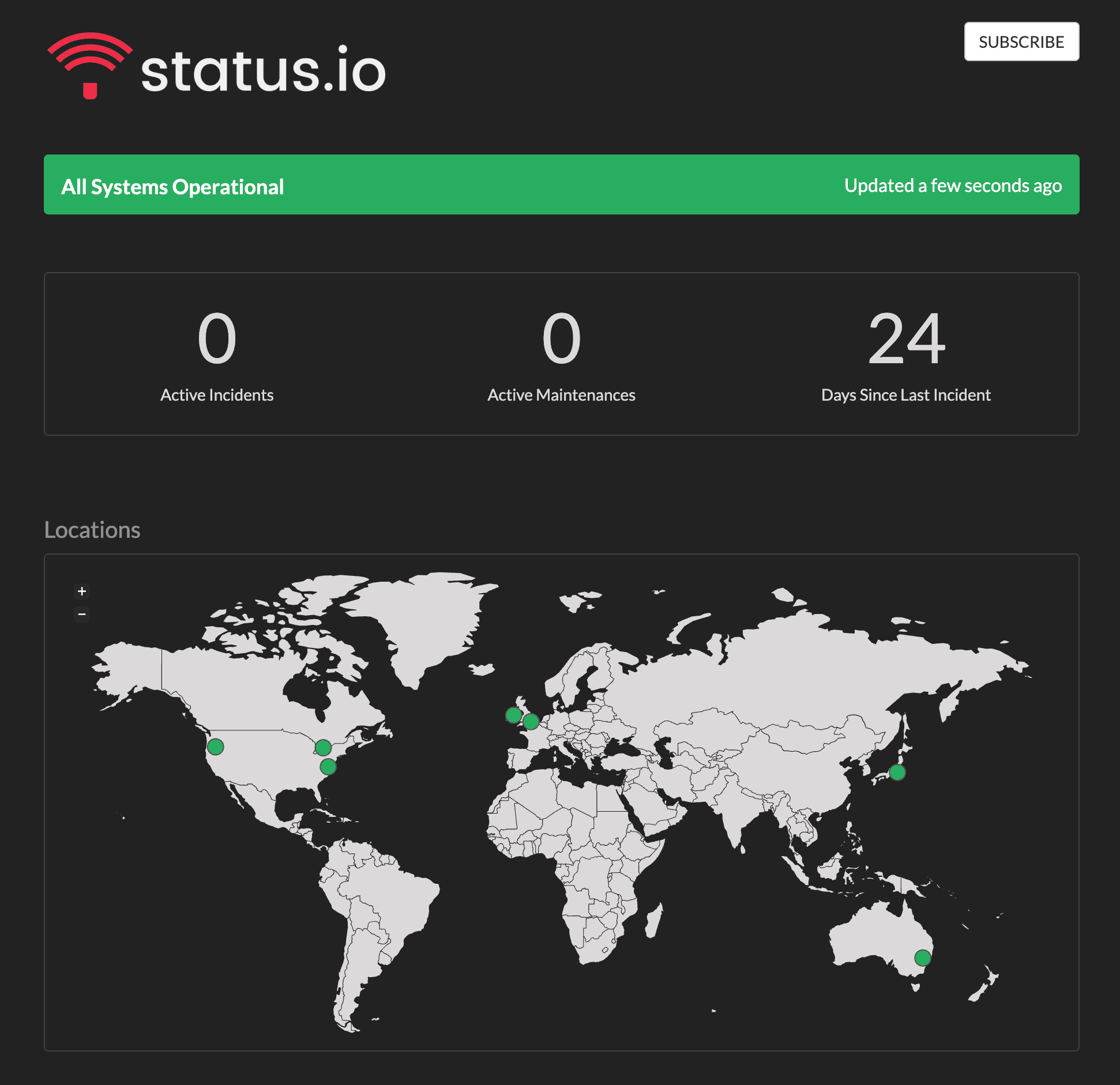
Status.io has been around since 2013 and powers status pages for established companies. If you want a mature, battle-tested tool focused purely on status communication, it's a solid choice.
Pricing: Instatus vs Status.io
Monitoring
Incident response
Status page
50 monitors
30 sec checks
SMS & Calls
team members
20 on-call members
Incident escalations
50 team members
5,000 subscribers
Custom domain
Start free
/ mo
Which One is Right for You?
Choose Status.io if: you need location maps, containers for complex architectures, or deep integrations with monitoring tools like Pingdom and New Relic — and don't mind higher pricing.
Choose Instatus if: you want a more affordable all-in-one solution with built-in uptime monitoring, incident response, and on-call. Best for startups, SaaS products, and dev teams.
Final Verdict
If you want:
- Affordability — free plan and lower prices at every tier
- Built-in uptime monitoring & incident response
- Multi-language support out of the box
- Fast, CDN-backed static pages
👉 Then Instatus is a strong alternative to Status.io.
Set up your beautiful status page in 15 seconds — free plan available!

Get ready for downtime
Monitor your services
Fix incidents with your team
Share your status with customers