

Pingdom vs Instatus
Instatus helps you share uptime updates with your users — faster, easier, and without the steep learning curve.
Start for free
Hey! Trying to decide between Pingdom and Instatus? Both tools help teams monitor uptime — but they're built for very different purposes.
Pingdom is a monitoring-only platform by SolarWinds, focused on synthetic monitoring, RUM, and infrastructure observability. It doesn't offer a status page at all.
Instatus is purpose-built for status pages, incident response, and on-call — with monitoring included.
What's the overall summary?
| Pingdom | Instatus | |
| Primary focus | Synthetic & real user monitoring | Status pages, incident response & on-call |
| Free plan | Trial only (14 days) | Free forever, unlimited team members |
| Setup time | Manual config required | Under 10 seconds |
| Incident response | ||
| Incident response on Slack | ||
| On-call | ||
| Status page | Public & private, fully customizable | |
| Real-time incident updates | Rich text, images, team comments | |
| Uptime monitoring | Synthetic, RUM, transaction | HTTP, keyword, ping, TCP, SSL, DNS |
| Public uptime history | Publicly viewable | |
| Branding & customization | Logo, CSS, JS, custom domain, themes | |
| Multi-language support | 21 languages | |
| Subscriber notifications | Email, SMS (alerts only) | Email, SMS, voice, Slack, Discord, Teams, webhooks, RSS |
| Status page speed | Fast, CDN static pages | |
| Custom CSS | ||
| Private status pages | ||
| Pricing | From $12/mo (scales steeply) | Free plan + from $20/mo flat |
| Team members | Limited by plan | More members on every plan. Unlimited on Business plan |
| UI & usability | Functional but dated | Clean, modern, and intuitive |
So what does Instatus do better?
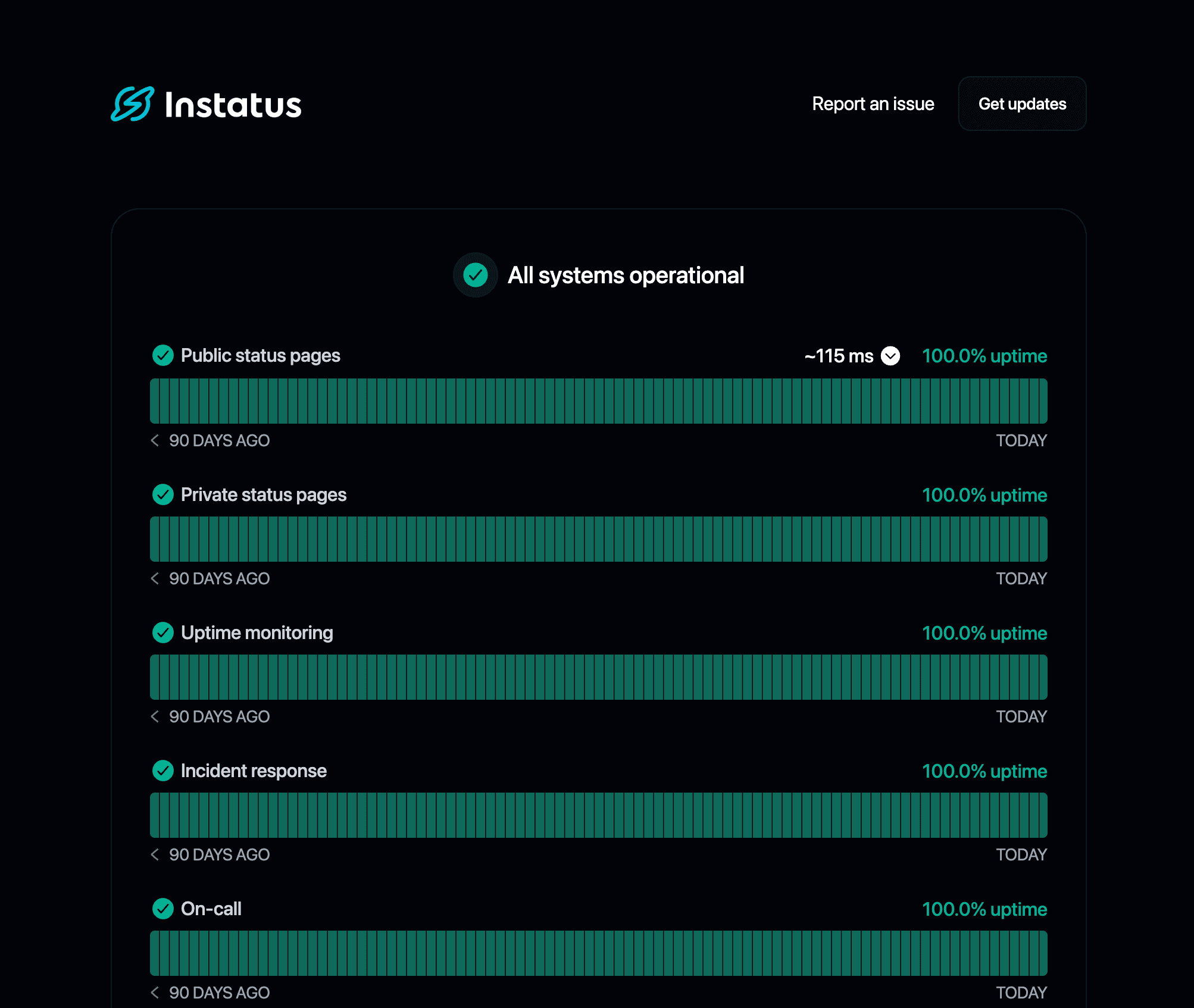
Pingdom is a monitoring-only platform — it doesn't include a status page. It detects downtime and alerts your team, but offers no way to communicate service status to users.
Instatus is built around status pages — fast, reliable, and beautiful. You get rich incident updates, multi-channel notifications, drag-and-drop components, and 21 built-in languages. None of which Pingdom offers.
Instatus lets you communicate incidents clearly with rich text, images, and markdown. Post updates, notify subscribers, and add team comments — from your dashboard or Slack.
This goes well beyond Pingdom's basic email and SMS alerts. Your users see exactly what's happening in real time, reducing confusion and building trust.
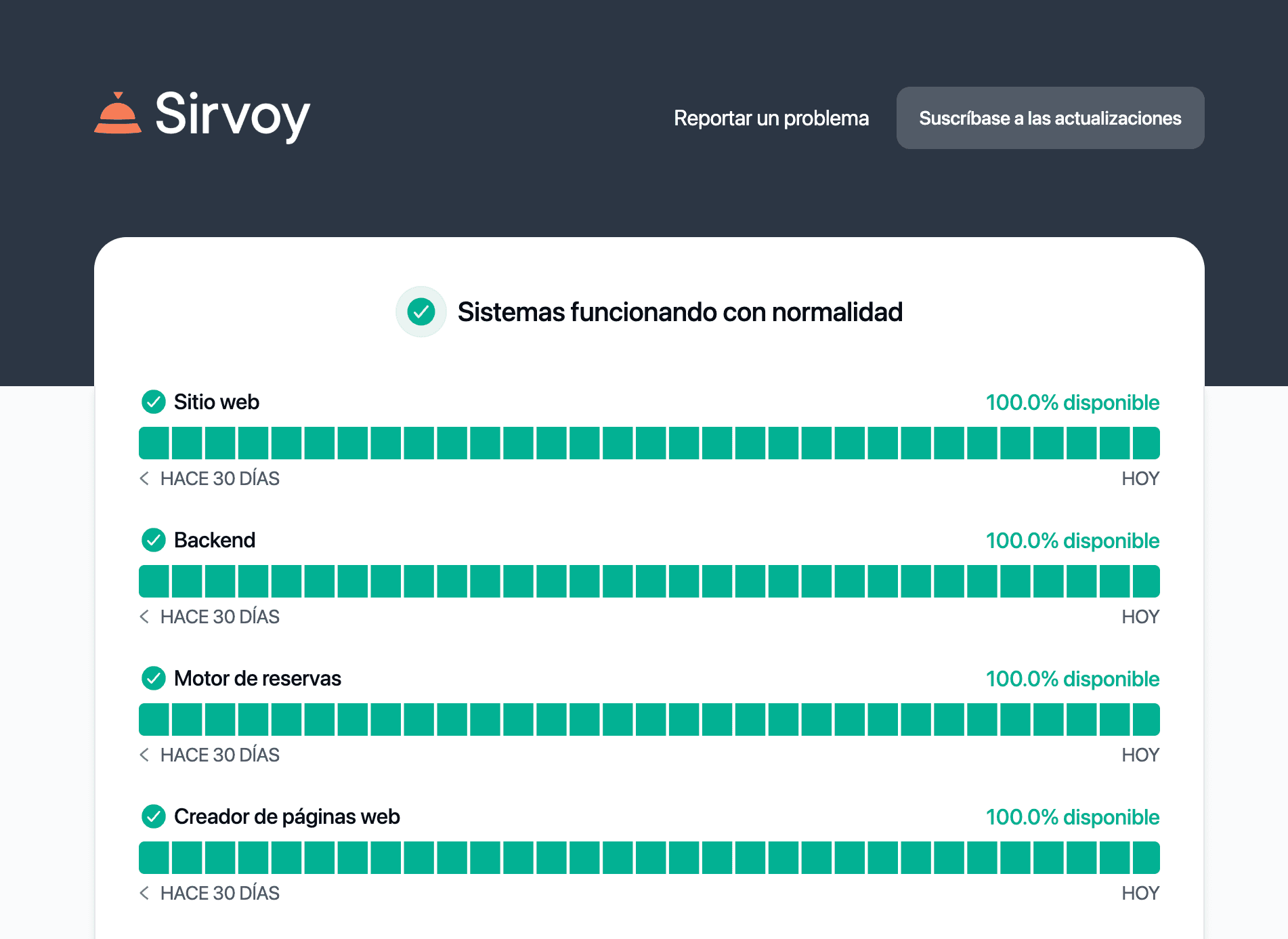
From custom domains and logos to editable CSS, JavaScript, and themes, Instatus gives you complete branding control. Your status page looks and feels like a seamless part of your product.
Pingdom doesn't offer a status page, so branding isn't even an option. With Instatus, you also get private status pages for internal teams, clients, or stakeholders — all under your own brand.
What does Pingdom do better?
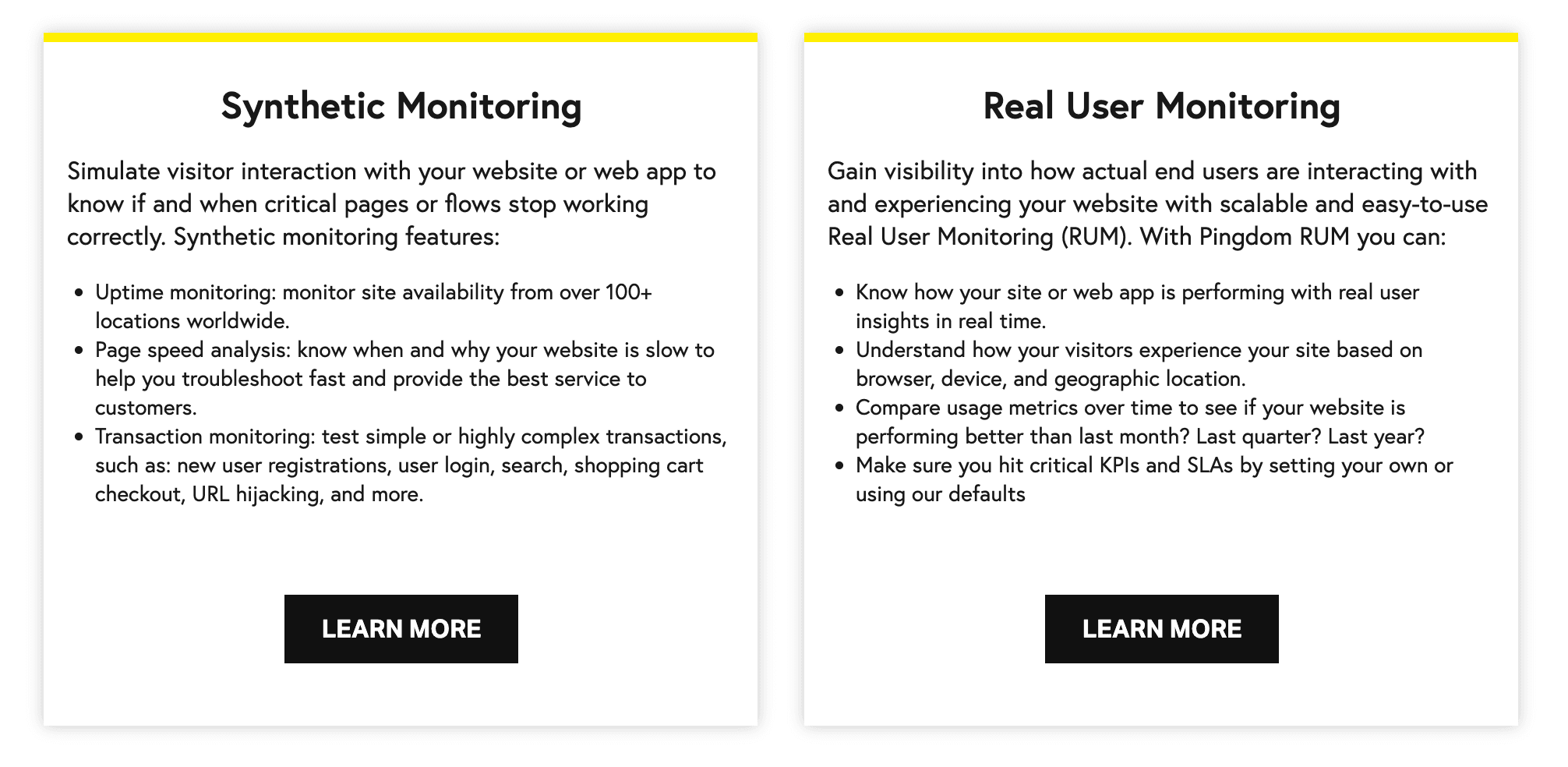
Pingdom is one of the most established monitoring platforms, backed by SolarWinds. It offers synthetic, RUM, transaction, and infrastructure monitoring — a full observability stack.
If you need page load data, user experience maps, and server-level visibility alongside uptime checks, Pingdom's depth is hard to beat. Instatus focuses on uptime monitoring (HTTP, keyword, ping, TCP, SSL, DNS) rather than full-stack observability.
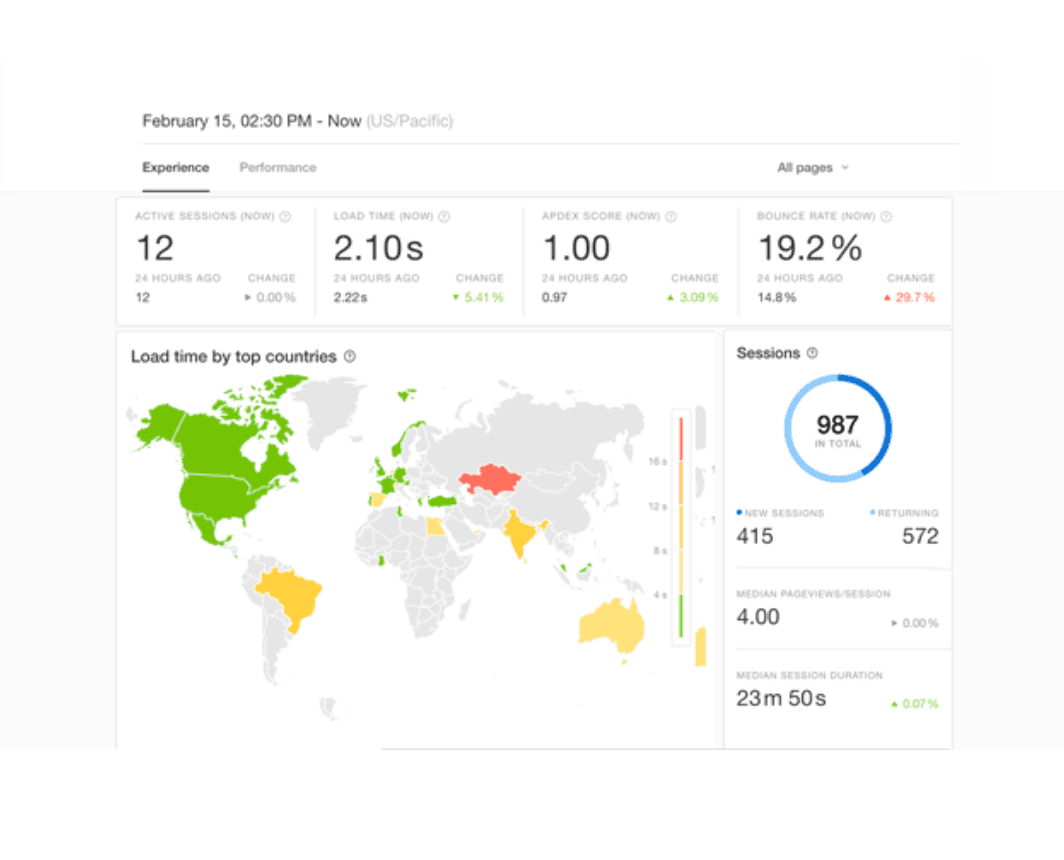
Pingdom's Real User Monitoring tracks visitor sessions, page load times, geographic performance, and browser metrics. It shows how real users experience your site — not just whether it's up or down.
If front-end performance analytics are a priority, Pingdom's RUM is more advanced. Instatus focuses on communicating status rather than collecting performance telemetry.
Integrations: Instatus vs Pingdom
Both tools support integrations, but with very different approaches.
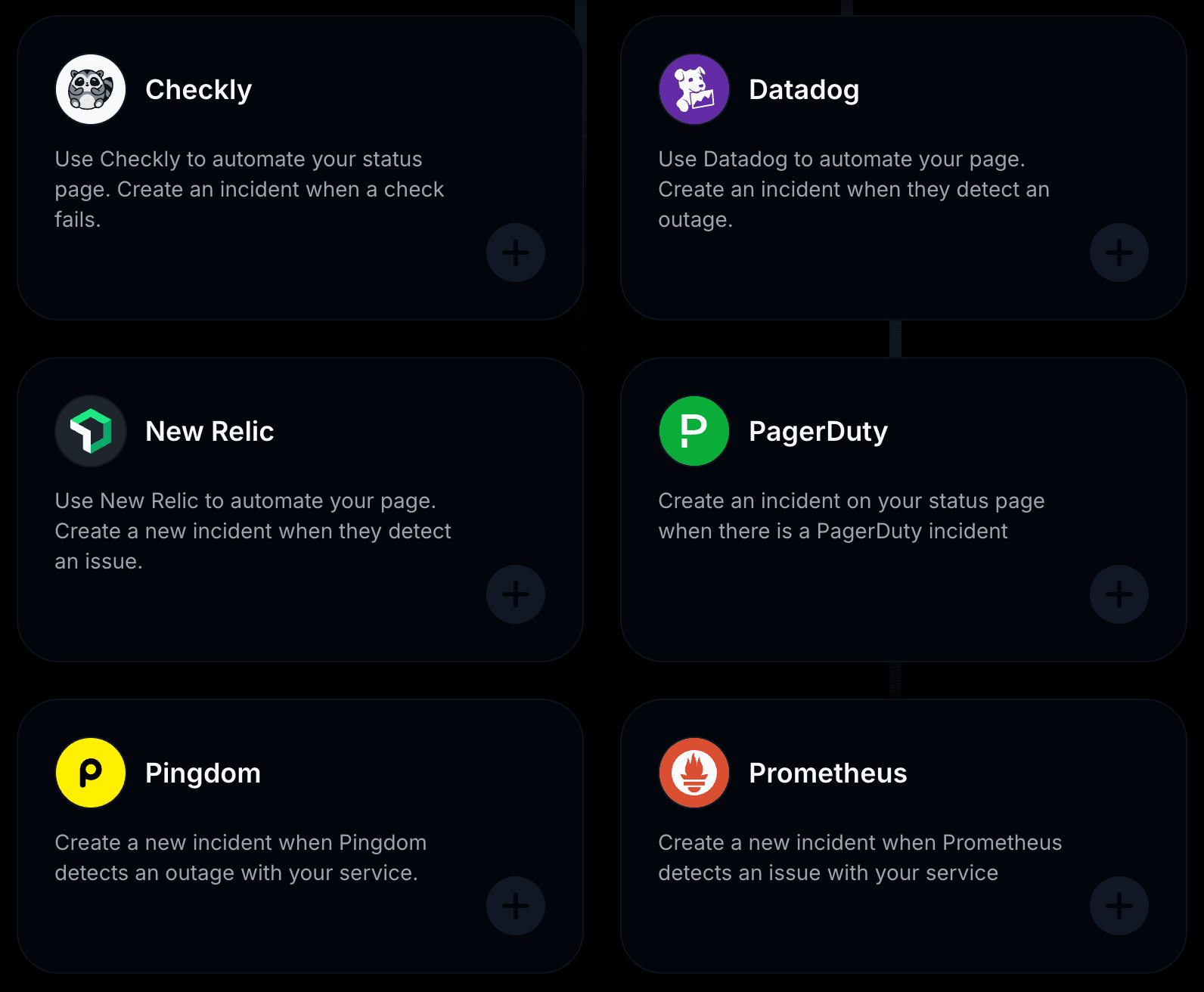
Instatus connects with 29+ tools out of the box — Pingdom, Datadog, UptimeRobot, New Relic, Slack, Discord, Teams, and more. It also supports email, SMS, and voice notifications. Designed to pull monitoring data and communicate it beautifully to your users.
Pingdom focuses on internal alerting via email and SMS, with limited webhook support. It has a Slack integration for alerts but lacks Teams, Discord, or other collaboration tools. With no status page, there are no subscriber or public communication integrations.
If you want monitoring-to-status-page automation with multi-channel notifications, Instatus covers more ground. Many teams use Pingdom for monitoring and connect it to Instatus for their public status page.
Pricing: Instatus vs Pingdom
Instatus gives you more value without hidden fees. Pingdom's Starter plan at $12/month covers just 10 checks, and costs jump fast as you add monitors. The Professional plan reaches $199/month. And with no status page, incident response, or on-call, you'd need separate tools — adding significant cost.
Instatus keeps pricing simple. The free plan includes unlimited team members and subscribers. Paid plans start at $20/month with status pages, monitoring, incident response, and on-call included — no per-member fees, no surprises.
Use the calculator below to compare plans and see how much you could save by switching.
Monitoring
Incident response
Status page
50 monitors
30 sec checks
SMS & Calls
team members
20 on-call members
Incident escalations
50 team members
5,000 subscribers
Custom domain
Start free
/ mo
Why Users Love Instatus
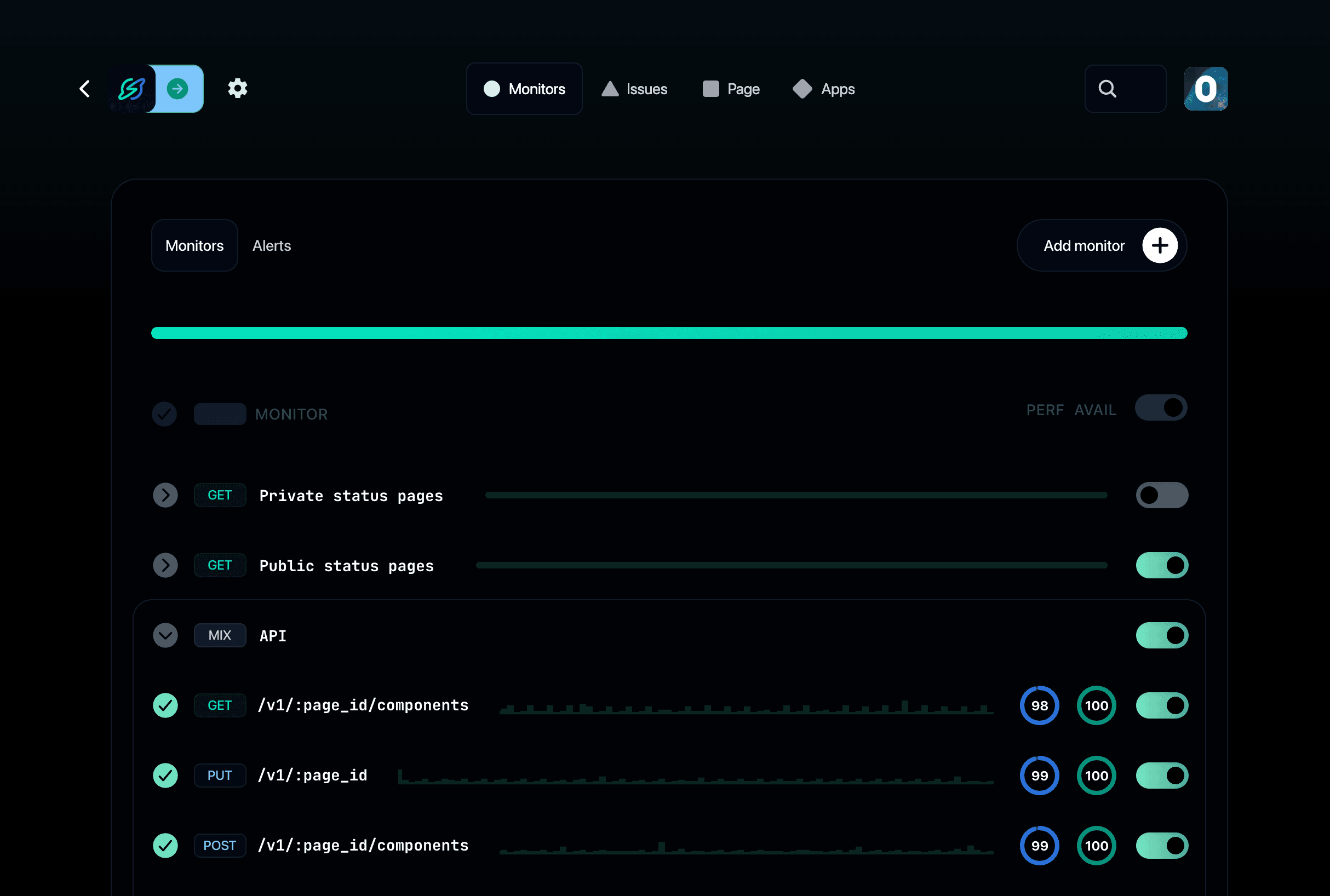
Keep Customers in the Loop — Instatus notifies subscribers the moment an incident is reported or resolved. With email, SMS, voice, webhooks, and RSS, users stay updated without refreshing or contacting support.
Customization & Branding — Make your status page feel like part of your product. Add your logo, colors, custom domain, and custom CSS. Your page reflects your brand while staying functional and easy to use.
Mobile-Perfect — Instatus is fully responsive, looking great across phones, tablets, and desktops — even on slower connections.
SEO-Friendly by Default — Clean URLs, proper metadata, and fast load times help your status page rank well. Users find your updates directly through search engines.
Testimonials
Instatus is cost effective, looks great, and is fast to set up. When other status software is $100/mo+, Instatus makes it affordable to keep your users updated. Jay D., CEO, Consumer Services
Instatus is a comprehensive platform for managing the uptime and performance of websites, and it has surpassed my expectations in a number of areas. Intelligent Design
Instatus allows users to create a status page to communicate their current status with customers. It can also showcase their current and historical uptime to build trust. Software Advice
Which One is Right for You?
Choose Pingdom if: you only need deep synthetic monitoring, RUM, and infrastructure observability — and don't mind using separate tools for status pages, incident response, and on-call.
Choose Instatus if: you want a beautiful status page with built-in monitoring, incident response, on-call, and a Slack app. Best for startups and SaaS teams that care about how they communicate during incidents.
FAQs
Is Instatus free to use? Yes. Our free plan includes unlimited team members, real-time incident updates, and a beautiful public status page.
Can I use Instatus alongside Pingdom? Definitely. Many teams use Pingdom for monitoring and Instatus for user-facing status. You can connect Pingdom alerts directly to Instatus to automate updates.
Does Instatus support real incident communication? Yes. Post updates, add timelines, notify subscribers, and allow team comments — from your dashboard or Slack.
How customizable is it? Very. Add your brand's logo, fonts, colors, and even full custom CSS. Your status page won't just look good — it'll look like you.
Does it support global teams? Yep! Instatus supports 21 languages, perfect for SaaS and DevOps teams with a worldwide customer base.
How fast can I launch? Under 10 seconds. No joke. You can sign in and have a live status page faster than most apps can load.
Can I import data from Pingdom to Instatus? Yes. Instatus integrates with Pingdom, so you can keep monitoring while upgrading your status page.
Can I use Instatus just for status pages, not monitoring? Absolutely. Instatus works standalone, and you can connect it to any monitoring service you already use — including Pingdom.
Final Verdict
If you want:
- A polished, branded status page — something Pingdom doesn't offer at all
- Built-in incident response & on-call — manage incidents directly from Slack
- Multi-channel subscriber notifications — email, SMS, voice, Slack, webhooks, RSS
- 21 built-in languages — reach your global audience
- Flat, transparent pricing — no per-member fees, no steep scaling costs
👉 Then Instatus is a strong alternative to Pingdom.
Pingdom is solid for deep monitoring and observability. But it stops there — no status page, no incident response, no on-call. Instatus gives you the full package in one place, at a fraction of the cost.

Get ready for downtime
Monitor your services
Fix incidents with your team
Share your status with customers